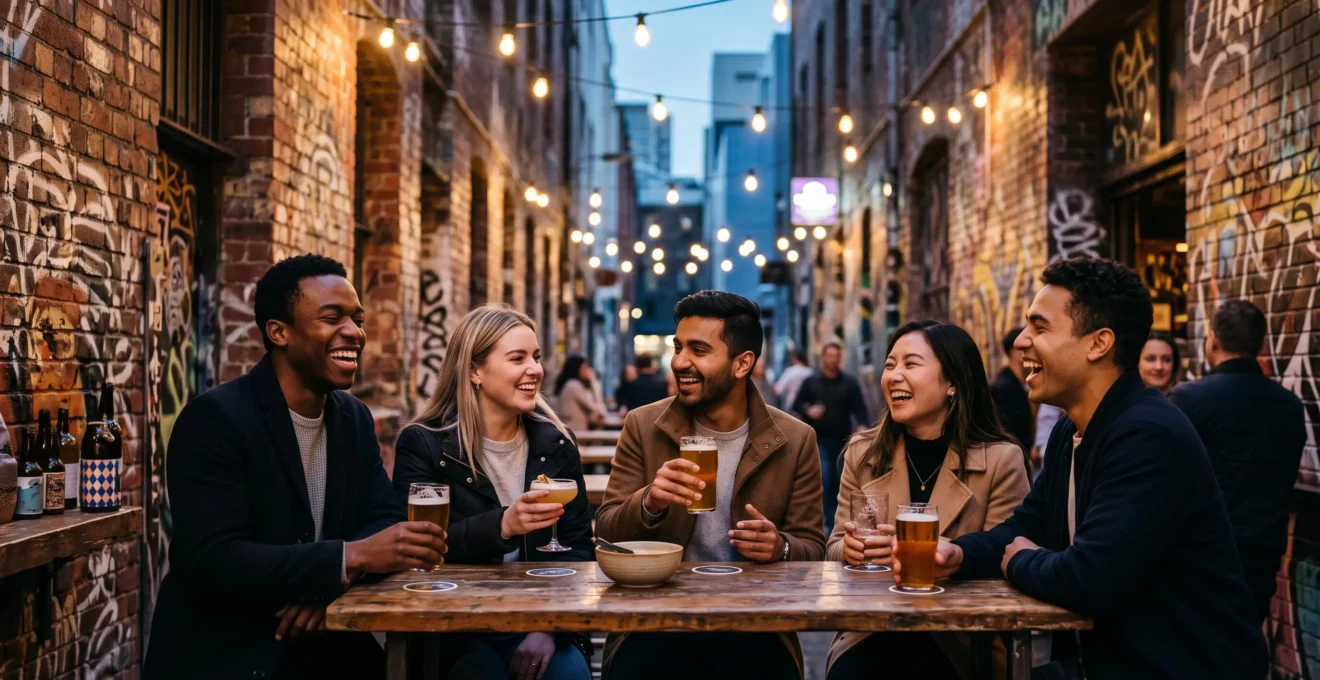
Finding genuine nightlife in Australia isn’t about a secret list of bars; it’s about decoding each city’s unique cultural DNA. Contrary to the idea that you just need to avoid tourist traps, the real skill lies in understanding the history of its regulations, like Sydney’s lockout laws, and the specific venue ecologies they created. This guide gives you the framework to read the city like a local, predicting where the real energy is long before you arrive.
There’s a specific kind of travel disappointment that hits hard. It’s 11 PM in a new Australian city, and you find yourself in a soulless, brightly-lit pub surrounded by other tourists, paying $15 for a generic beer. You followed the travel blogs, you looked at the « Top 10 » lists, but the atmosphere is flat, and you can’t shake the feeling that the real party is happening somewhere else. This experience is a common rite of passage for visitors who mistake the most visible nightlife for the most authentic.
The standard advice— »avoid the main tourist strips »—is true, but it’s also incredibly unhelpful. It doesn’t tell you where to go instead, or more importantly, *how* to find it. The key isn’t a magical address. It’s a change in perspective. The true character of an Australian city’s after-dark scene is written in its licensing laws, its neighbourhood rivalries, and its recovery from past policies. Instead of looking for a destination, you need to learn how to read the map of its cultural DNA.
This guide will equip you with that skill. We will dissect the forces that shape where locals drink, from the legal frameworks that define a venue’s vibe to the cultural scars that have pushed authentic scenes into new postcodes. By understanding these systems, you’ll be able to bypass the tourist traps and tap directly into the genuine, vibrant heart of Australian nightlife.
This article provides a complete roadmap for understanding and navigating the unique after-dark ecosystems of Australia’s major cities. Below, the summary outlines how we’ll break down the codes, from legal structures to cultural timing, so you can find the experience you’re looking for.
Summary : Decoding the DNA of Australian Nightlife
- Why Australian Nightlife Ends at 2am While Berlin Is Just Warming Up
- How to Navigate Lockout Laws and Venue Restrictions in Australian Cities
- Rooftop Bars or Laneway Venues: Which Australian Nightlife Fits Your Vibe?
- The Nightlife Districts Australians Abandoned That Still Trap Tourists
- When to Go Out in Australian Cities for Peak Energy Without Hour-Long Queues
- How to Live Like a Coastal Local Beyond the Tourist Beaches
- Why Melbourne’s Laneways Reveal More Than Its Grand Boulevards Ever Will
- How to Experience Melbourne’s Arts and Laneway Culture Like a Local in 5 Days
Why Australian Nightlife Ends at 2am While Berlin Is Just Warming Up
The first culture shock for many visitors is the perceived early closing times. While Berlin’s clubs are just hitting their stride, many Australian venues are calling for last drinks. It’s easy to assume this reflects a lack of stamina, but the reality is rooted in a complex history of state-level regulation, public health concerns, and a lingering « nanny state » reputation. The hours a venue keeps are not a reflection of its popularity but a direct consequence of its license and the local council’s policies. This regulatory framework is the foundational piece of the nightlife DNA you need to understand.
For decades, nightlife was heavily controlled, leading to a homogenous scene dominated by large-capacity pubs and clubs. These policies had significant economic consequences. For instance, a review found New South Wales was lagging behind other states in an after-dark economy with massive potential. This lag isn’t due to a lack of demand but to a regulatory environment that historically stifled diversity and innovation in the market worth a potential $110 billion. The « early » closing times are a symptom of this history.
However, this is changing. Cities are now actively trying to revitalise their night-time economies by relaxing laws and encouraging a wider variety of venues. The 2am or 3am closing time is no longer a hard-and-fast rule everywhere, but the legacy of these restrictions has shaped the rhythm of a night out. Locals have adapted by starting their evenings earlier and learning to navigate a mosaic of different closing times across different venue types. Understanding this historical context is the first step to syncing up with the local tempo.
How to Navigate Lockout Laws and Venue Restrictions in Australian Cities
The term « lockout laws » still sends a shiver down the spine of many Sydney locals. Though largely repealed, their impact created deep cultural scar tissue and fundamentally rewired the city’s nightlife geography. These laws, which prevented entry into venues after 1:30 am in the city centre, didn’t kill the desire to go out; they simply displaced it. Understanding the ghost of these laws and the licensing system that has risen in their place is your secret weapon.
The most important development for authentic nightlife has been the rise of the « Small Bar Licence. » Introduced to encourage more intimate, sophisticated venues as an alternative to large, beer-soaked pubs, this license category has become the primary driver of character-filled bars. These venues are legally defined by their capacity (often capped at 120 people), their focus on quality drinks over gaming machines, and their more restricted, though often extendable, trading hours. Recently, the system has evolved, and now 521 venues are using extended trading hours for music programming, a four-fold increase from 2023 that signals a major cultural rebound.
This table illustrates the fundamental differences in the DNA of a small bar versus a traditional pub or hotel, which explains why they offer such different experiences.
| Feature | Small Bar Licence | General/Hotel Licence |
|---|---|---|
| Patron cap | 120 | No fixed cap |
| Gaming machines | Not permitted | Often permitted |
| Trading hours risk loading | Exempt | Up to $5,000 for late trading |
| Application fee | Lower fixed fee | Higher fee (~$700) |
When you see a venue described as a « small bar, » you can now decode what that means: an intimate space designed for conversation and quality, born from a specific legislative push to diversify the city’s offerings. Seeking these out is a direct path to the kinds of places locals cherish.
Rooftop Bars or Laneway Venues: Which Australian Nightlife Fits Your Vibe?
As Adventures & Sunsets magazine notes, « Whether it’s rooftop cocktails with a view of the Sydney Opera House or grungy live music in Melbourne’s laneways, there is a nightlife here that will suit you. » This perfectly captures the two archetypal Australian nightlife experiences, each reflecting the personality of its home city. The choice between them isn’t just about stairs versus corridors; it’s about choosing what you want your night to feel like: expansive and scenic, or intimate and discovered.
This contrast is starkly visualized by the open, airy feel of a Sydney rooftop bar versus the hidden, intimate nature of a Melbourne laneway entrance.
Sydney, a city defined by its harbour and sunny disposition, expresses its nightlife outwards and upwards. Its rooftop bars are about spectacle—the glittering skyline, the water views, the feeling of being part of the city’s glamorous facade. In contrast, Melbourne, a city of secrets and internal courtyards, turns inwards. Its world-famous laneway culture is about the thrill of discovery. With approximately 200 laneways in its CBD, the best experiences are often hidden behind an unmarked door or down a graffiti-covered alley. It’s a scene that rewards curiosity.
Neither is inherently better, but they serve different moods. A rooftop bar is for when you want to see and be seen, to feel the city’s energy all at once. A laneway bar is for when you want to feel like you’ve stumbled upon a secret, a pocket of the city that feels like it belongs just to you. To find authentic nightlife, you must first decide which of these two fundamental modes of Australian socialising you’re in the mood for.
The Nightlife Districts Australians Abandoned That Still Trap Tourists
One of the most powerful forces in shaping authentic nightlife is repulsion. When a district becomes a « tourist trap, » it creates a vacuum that local culture rushes to fill elsewhere. This creates what can be called a Tourist Gravity Well: an area so saturated with generic, overpriced, and often-aggressive venues that it actively repels locals. The most potent example of this in Australia is Sydney’s Kings Cross.
Case Study: The Collapse of Kings Cross
Once the undisputed, gritty heart of Sydney’s nightlife, Kings Cross became ground zero for the lockout laws. The aftermath was a catastrophic decline in local patronage, turning it into a ghost of its former self. A City of Sydney study found that foot traffic had plummeted by a staggering 80 per cent in the post-lockout era. While tourists are still drawn by its historical reputation, locals have almost entirely abandoned it, associating it with a bygone, broken era. It now serves as a case study in how quickly an entire district can be culturally abandoned.
So, where did the locals go? They migrated to surrounding suburbs like Newtown, Enmore, and Marrickville. These areas, already possessing a strong independent streak, absorbed the creative energy and patronage that fled the city centre. The result was a boom in the exact kind of venues that define authentic nightlife today. This is perfectly captured by one local’s description of a newer spot that filled the void:
Described as a newish addition to the Newtown circuit but a favourite with locals for its nice cocktails, free popcorn and a Melbourne-ish vibe, this kind of venue is exactly what locals now seek out instead of the old mega-club strips.
– VICE
To find the real scene, your first question shouldn’t be « Where do I go? » but « Where do the locals *not* go? ». By identifying the major tourist gravity wells (like Darling Harbour in Sydney or the main drag of Surfers Paradise), you can immediately narrow your search to the surrounding, more residential suburbs where true local culture is thriving.
When to Go Out in Australian Cities for Peak Energy Without Hour-Long Queues
Finding the right place is only half the battle; finding it at the right time is the other. Australian nightlife isn’t a single event but a progression—a « flow of the night » that moves across different types of venues as the hours pass. Arriving at a late-night cocktail bar at 7 PM is as jarring as turning up to a dinner spot at midnight. Mastering this flow is the key to experiencing peak energy without spending your night waiting in line.
A typical Saturday night for a local doesn’t involve camping out at one venue. It’s a more fluid journey. The evening might begin with dinner and early drinks at a neighbourhood restaurant or a relaxed pub. As the night progresses, the group will migrate towards a second, more energetic venue—perhaps a small cocktail bar or a laneway spot—around 10 or 11 PM, just as the post-dinner crowd arrives. The final stop, if there is one, is often a more spontaneous decision, heading to a place with live music or a late license that’s known to be buzzing after 1 AM.
This rhythm is a direct response to the venue ecology. Because different licences permit different closing times, locals have learned to surf the wave of the city’s closing-time schedule. The goal is to arrive at each venue just as its energy is cresting. The following plan breaks down this typical flow into actionable steps.
Your Action Plan: The Flow of a Genuine Australian Night Out
- The Anchor (7-9 PM): Start with dinner or early drinks at a relaxed local restaurant or pub in a neighbourhood slightly outside the main CBD, before the crowds build.
- The Bridge (9-11 PM): Move into a precinct that mixes older pubs with modern cocktail bars. This allows the night to build slowly and offers options.
- The Peak (11 PM – 1 AM): Transition to your target laneway or rooftop venue. The first wave of patrons will be leaving, opening up space and reducing queue times.
- The Finale (Post-1 AM): Keep the final stop flexible. Ask a bartender at your « Peak » venue where they’d go next. Each city has its own rhythm; tap into local knowledge for the best late-night spots.
By following this progression, you’re not just going out; you’re participating in the city’s nightly ritual, moving with the crowd instead of against it.
How to Live Like a Coastal Local Beyond the Tourist Beaches
Once you leave the major capitals and head for Australia’s famous coastline, the rules of nightlife shift again. The tourist trail will lead you directly to the sprawling surf club on the main beach or the flashy cocktail bar with an uninterrupted ocean view. And just like in the cities, this is where you’ll find the fewest locals. The authentic coastal social scene is often found a few streets back from the waterfront, in two hallowed Australian institutions: the RSL and the « bowlo. »
The Returned and Services League (RSL) clubs and the local Bowling Clubs are the true community hubs in many coastal towns. Originally established for war veterans and lawn bowlers respectively, they are now open to all and function as the town’s de facto living room. Here, the vibe is unpretentious and deeply local. Forget craft cocktails; this is the land of the « schooner » (a 425ml beer glass), the meat raffle, and the parmigiana special. It’s where you’ll hear unfiltered local gossip and see a live band that the whole town has come out to support.
Finding these places requires you to ignore the prime real estate. Look for a low-slung brick building with a big car park, often a block or two away from the beach. Don’t be deterred by the dated decor or the fluoro lights. This is the trade-off for authenticity. Going to the bowlo for a sundowner is not just about getting a cheaper beer; it’s about participating in the town’s social fabric in a way that no tourist-facing venue can offer. It’s the coastal equivalent of finding a hidden laneway bar: an experience that feels earned and real.
Key takeaways
- The vibe of a venue is dictated by its license; understanding the « Small Bar » category is key to finding intimate, quality-focused spaces.
- Locals abandon nightlife districts that become « tourist gravity wells, » creating new, authentic scenes in adjacent suburbs.
- An authentic night out follows a flow, moving from relaxed early-evening spots to more energetic late-night venues.
Why Melbourne’s Laneways Reveal More Than Its Grand Boulevards Ever Will
No discussion of Australian nightlife is complete without a deep dive into Melbourne’s laneways. But the common advice— »go explore the laneways »—is like telling a visitor in Paris to « go see some art. » It’s true, but it misses the entire point. Melbourne’s laneways are not a single entity; they are a sprawling, diverse ecosystem of micro-districts, each with its own distinct personality, history, and purpose. To treat them as interchangeable is to miss the genius of the city.
This isn’t a recent trend. The laneways are woven into the city’s very fabric, a network that has been evolving for over 150 years. They are the arteries of Melbourne’s creative heart. To appreciate their depth, you must learn to differentiate them. Don’t just wander aimlessly; wander with intent. Understand that Hosier Lane is an ever-changing open-air art gallery, Degraves Street is a slice of European café culture, and AC/DC Lane is a loud, proud tribute to rock and roll. Some lanes are for coffee, some for cocktails, some for quiet contemplation, and some for loud, messy fun.
The real magic happens when you start exploring the lesser-known alleys that branch off the famous ones. Look for the smaller, easily-missed paths like Mornane Place, which have a quieter, more underground atmosphere. This is where you’ll find the next generation of venues, the places that haven’t yet made it onto the tourist maps. This is the difference between consumption and discovery. The grand boulevards show you Melbourne’s impressive face, but the laneways reveal its complex, creative, and endlessly fascinating soul.
How to Experience Melbourne’s Arts and Laneway Culture Like a Local in 5 Days
Ultimately, experiencing a city like a local is a mindset, not an itinerary. It’s about shifting from being a passive consumer of landmarks to an active participant in the city’s culture of discovery. Melbourne, with its laneway art and hidden bars, is the perfect city to practice this. The method is simple: treat the city itself as a gallery, where the best pieces are often unannounced and temporary.
Case Study: The Evolution of Melbourne’s Street Art
The journey of Melbourne’s street art provides the perfect metaphor for finding authentic culture. It traces its origins to an underground graffiti movement that arrived in the early 1980s, long before it was celebrated. An iconic early moment, Keith Haring’s 1984 mural at Collingwood Technical College, marked a shift from illegal expression towards public art. This trajectory—from underground to institutionally recognised—is exactly the path authentic venues and experiences follow. The goal of a savvy traveller is to find things closer to their « underground » origins.
To do this, use the city’s infrastructure as your discovery tool. Combine walking tours of the main art lanes with the free City Circle Tram, but make a point of hopping off at random stops between the famous ones. Dedicate a full day to « art hunting » with no fixed destination. Revisit the same laneways on different days; a wall you saw on Monday might be completely transformed by a new piece on Wednesday. This constant state of flux is the essence of the city’s creative spirit.
This approach transforms your trip from a checklist of sights into a treasure hunt. You are no longer just looking for a cool bar or a nice mural; you are engaging with the very process that creates them. You’re learning to see the city not for what is advertised, but for what it might reveal if you look closely enough.
By applying this « decoder » mindset—understanding the laws, identifying the tourist voids, and following the natural flow—you equip yourself to step past the velvet rope of tourism and enter the genuine, dynamic world of Australian nightlife, no matter which city you’re in.