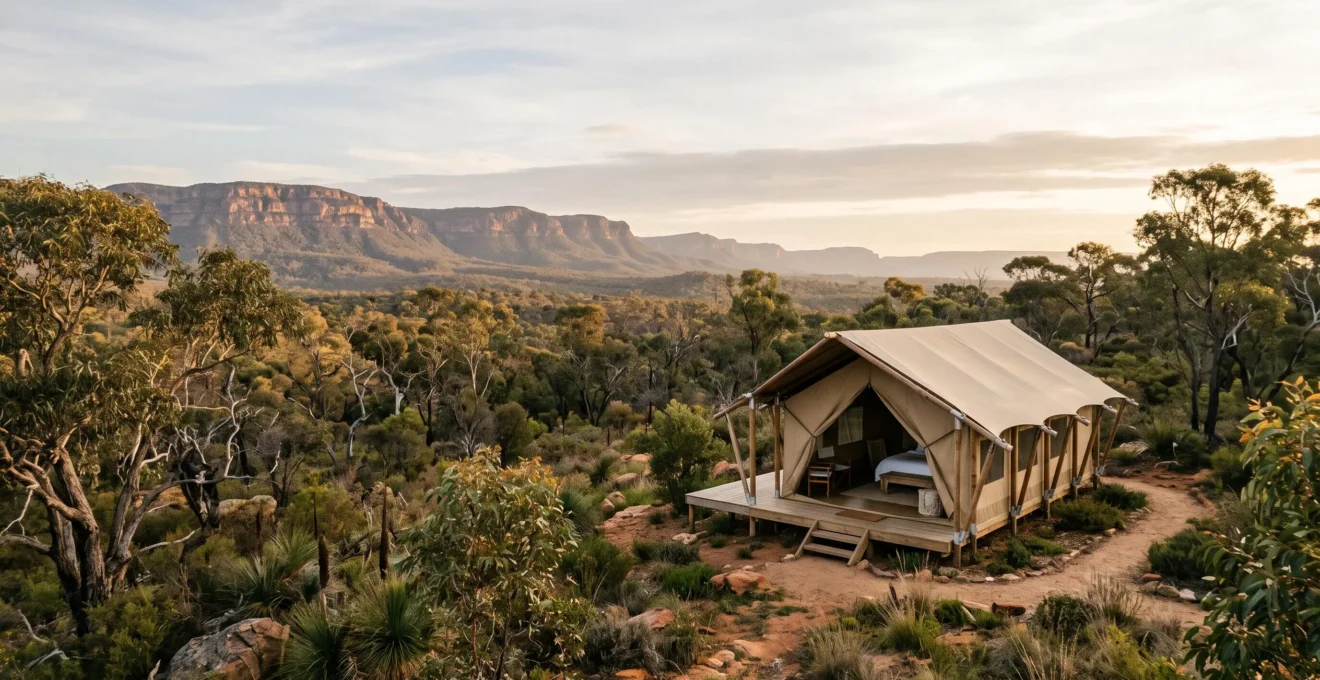
The true value of Australian glamping isn’t in the luxury amenities, but in the verifiable authenticity of its connection to the wilderness.
- Genuine immersion is measurable through « sensory permeability » and verifiable remoteness using digital tools.
- Eco-labels and wildlife encounters can be vetted before booking to ensure they are real, not just marketing.
Recommendation: Stop booking based on photos of fancy tents; start auditing for genuine ecological proximity.
The allure of glamping is powerful: the romance of sleeping under the stars without sacrificing the comfort of a real bed. In Australia, this promise is amplified by a landscape that feels ancient, vast, and truly wild. Yet, as the glamping market explodes, a critical distinction has emerged. Many new sites offer little more than a luxury hotel room with canvas walls, situated in settings that are scenic but hardly wild. They sell the aesthetic of adventure without the substance.
The common advice—check the amenities, read the reviews—falls short because it fails to address the core desire of the nature lover: genuine immersion. This guide is built on a different premise. It rejects the platitudes and equips you to become a « wilderness detective. » We will move beyond the thread count and the private plunge pool to evaluate a site’s most important feature: its authenticity. This is not about roughing it; it is about ensuring your comfort is a gateway to the wilderness, not a barrier from it.
This article will provide you with a framework to audit a glamping experience before you book. We will explore how to assess a site’s remoteness, the quality of its structure, its wildlife safety protocols, and its real commitment to sustainability. By the end, you’ll be able to distinguish a true wilderness retreat from a glorified resort, ensuring your investment delivers what you truly seek: a profound connection with the Australian bush.
To help you navigate this process of discovery, this guide is structured to build your expertise as a wilderness detective, from understanding the unique promise of Australian glamping to mastering the tools for responsible exploration.
Summary: A guide to vetting Australian glamping for authentic wilderness immersion
- Why Australian Glamping Delivers Wilderness Remoteness European Sites Cannot Match
- How to Assess Glamping Wildlife Safety for Peace of Mind Without Unnecessary Fear?
- Safari Tents or Eco-Pods: Which Glamping Structure Balances Comfort and Immersion?
- The Glamping Location That Puts Luxury Tents Near Highways, Not Real Wilderness
- When to Book Australian Glamping for Wildlife Encounters and Comfortable Sleeping Temperatures?
- Vehicle-Accessible or Remote Wilderness Parks: Which Australian Experience Delivers More?
- City Hotels or Rural Retreats: Which Accommodation for Rest or Immersive Experiences?
- How to Experience Australian National Parks Without Damaging Ecosystems or Risking Safety
Why Australian Glamping Delivers Wilderness Remoteness European Sites Cannot Match
The fundamental promise of Australian glamping is access to a scale of wilderness that is simply unavailable in many other parts of the world. Unlike Europe, where much of the « countryside » is a managed, agricultural landscape shaped by centuries of human activity, Australia offers vast tracts of land that remain ecologically ancient and profoundly remote. This isn’t just about big, empty spaces; it’s about the quality and age of the wilderness itself. True immersion here means connecting with ecosystems that have evolved in isolation over millennia.
This deep remoteness is the cornerstone of an authentic experience. It’s the difference between staying near a well-maintained forest and being situated within an old-growth rainforest that feels like a lost world. The sensory experience is incomparable: the air carries different scents, the sounds of the night are those of a fully functioning, complex ecosystem, and the sheer scale of the landscape can recalibrate your sense of place in the world. This is what you should be seeking—an ecological proximity that luxury amenities alone can never replicate.
The best Australian glamping sites understand this and use it as their unique selling proposition. They don’t just offer a view of the wilderness; they are embedded within it. This allows guests to experience a landscape shaped by geological time, not agricultural schedules.
Case Study: Nightfall Wilderness Camp, Lamington National Park
A prime example is Nightfall Wilderness Camp, which sits beside the headwaters of Christmas Creek within Queensland’s Lamington National Park. Described as a ‘Lost World paradise’, this site illustrates how Australian glamping can be embedded directly within an ancient, rarely-touched rainforest system. Guests aren’t just looking at the wilderness; they are living within it, gaining access to a landscape that offers a profound sense of deep geological time.
How to Assess Glamping Wildlife Safety for Peace of Mind Without Unnecessary Fear?
The very wilderness that makes Australian glamping so compelling also brings a common concern: wildlife, particularly snakes. The fear is understandable, but it’s crucial to approach it with facts, not fiction. An authentic wilderness experience involves coexisting with native fauna, and a reputable glamping operator will prioritise safety through smart design and clear guest education, not by creating a sterile, wildlife-free bubble. The goal is peace of mind without unnecessary fear, and that begins with understanding the real, statistical risk.
For instance, while Australia is home to venomous snakes, fatal encounters are exceedingly rare. The key is prevention and preparedness. Research from the University of Western Australia shows that of the estimated 3,000 snake bite cases annually, there are an average of only two deaths per year. A good operator will have robust emergency plans and first-aid knowledge, and they will educate guests on simple, effective behaviours to minimise risk.
When vetting a site, ask about their wildlife management and safety protocols. Do they provide guidance on walking in the bush? Are tents designed to be secure? Do they provide torches for night-time movement? The presence of a clear, sensible safety briefing is a hallmark of a professional, experienced operator who respects the environment and their guests. It demonstrates they are managing the real risks, allowing you to relax and enjoy the incredible opportunity to see wildlife in its natural habitat.
Key Steps for Safe Bushwalking Near Your Glamping Site:
- Keep your distance: Never attempt to touch, move, or kill a snake. Give it space and allow it to move away on its own.
- Dress appropriately: Always wear long pants and sturdy, closed-toe shoes when walking through bushland, even for short distances from your tent.
- Make your presence known: Make noise while walking by talking or scuffing your feet, which gives snakes time to sense your approach and retreat.
- Be aware of habitats: Understand that snakes often shelter in leaf litter or under logs and woodpiles, and they become more active as temperatures warm.
- Know the emergency procedure: In the unlikely event of a bite, treat it as a life-threatening emergency. A key first-aid step is to apply a pressure immobilisation bandage immediately and seek urgent medical help.
Safari Tents or Eco-Pods: Which Glamping Structure Balances Comfort and Immersion?
The type of structure you sleep in is not just a detail; it fundamentally defines your relationship with the surrounding wilderness. The choice between a canvas safari tent, a glass-walled eco-pod, or a yurt determines the degree of sensory permeability—how much you can see, hear, and even smell the bush around you. This is a critical factor in your audit for authentic immersion. A fully sealed, air-conditioned pod offers maximum protection from the elements but can feel disconnected, while a canvas tent lets the sounds and scents of the environment permeate your experience.
Canvas safari tents, for example, are highly permeable. You will hear the call of a distant bird, the rustle of a wallaby in the undergrowth, and feel the change in temperature as dawn approaches. This creates a powerful, visceral connection to the land. Glass-walled eco-pods, conversely, prioritise visual permeability while limiting auditory and olfactory exposure. They are excellent for cold climates or for those who want to feel secure while watching the weather roll in. There is no single « best » structure; the right choice depends on the climate and the type of immersive experience you are seeking.
A reputable operator will have chosen their accommodation type to suit their specific environment. The table below helps compare common structures, allowing you to match your preference for immersion with the reality of the design.
| Structure | Sensory Permeability | Best Climate Fit | Typical Comfort Level |
|---|---|---|---|
| Canvas Safari Tent | High auditory & olfactory (hear and smell the bush) | Dry heat regions (e.g. outback, tropical dry season) | Comfortable bed, ensuite, breathable interior |
| Glass-Walled Eco-Pod | High visual permeability, lower auditory/olfactory exposure | Cold or highland climates requiring insulation | Climate-controlled, solid structure |
| Yurt | Moderate auditory permeability, felt/canvas walls | Temperate regions, valley settings | Spacious, portable dwelling with central heating option |
| Treehouse | High visual and auditory permeability (elevated canopy views) | Forested, humid or rainforest climates | Elevated platform, close to canopy wildlife |
Action Plan: Verifying « Eco » Claims Before You Book
- Ask which specific ECO Certification tier the accommodation holds: Nature Tourism, Ecotourism, or the highest level, Advanced Ecotourism.
- Request evidence of ongoing sustainability practices, as certification requires maintaining high standards over time, not just a one-time award.
- Check if the operator is listed on an official directory like Ecotourism Australia’s Green Travel Guide, rather than only relying on their self-declared ‘eco’ status.
- Confirm whether their certification specifically covers energy, water, and waste management, not just aesthetic design choices.
- Enquire about community focus: Does their operation contribute positively to local environmental, social, and cultural outcomes?
The Glamping Location That Puts Luxury Tents Near Highways, Not Real Wilderness
One of the biggest red flags in the world of glamping is a disconnect between marketing imagery and geographical reality. Beautiful photos can create an illusion of perfect isolation, but the truth might be a site located just out of frame from a busy highway, a town, or another development. Your job as a wilderness detective is to perform an authenticity audit on the location itself. The single most reliable indicator of true remoteness is a lack of light and sound pollution.
A truly dark night sky is a profound and increasingly rare experience. As dark sky researchers note, an estimated 80% of the world’s population lives under light-polluted skies, making genuine darkness a luxury in itself. A glamping site that boasts about stargazing must be able to back it up. This means being situated far from the glow of city lights. The same principle applies to sound. The distant rumble of trucks or the noise from a nearby town completely shatters the immersive experience of listening to the subtle sounds of the bush at night.
Before booking, use digital tools to verify a site’s claims. Use Google Earth or satellite view on maps to inspect the property’s surroundings. Are there major roads, towns, or industrial facilities nearby? Cross-reference the location with a light pollution map (like lightpollutionmap.info) to check its Bortle scale rating—a measure of night sky brightness. A low rating confirms a genuinely dark sky. This digital sleuthing takes only a few minutes but is the most effective way to avoid disappointment and ensure you’re paying for true wilderness, not just a clever photographer’s angle.
Case Study: Verifying True Darkness at River Murray International Dark Sky Reserve
First-hand accounts can reveal crucial details about a site’s commitment to preserving darkness. One visitor to the River Murray International Dark Sky Reserve in South Australia noted that upon entering the reserve’s core dark zone, they were issued with red headlamps to preserve everyone’s night vision. This small detail is a powerful indicator of authenticity. It shows a deep commitment to the experience and is the kind of sensory verification travelers should look for in reviews before trusting a glamping site’s remoteness claims.
When to Book Australian Glamping for Wildlife Encounters and Comfortable Sleeping Temperatures?
Choosing the right time to go glamping in Australia is as important as choosing the right place. The country’s vastness means that « good » weather is highly regional and seasonal. More importantly, timing your visit to coincide with specific natural phenomena—like whale migrations, wildflower blooms, or comfortable sleeping temperatures in the outback—can elevate your trip from great to unforgettable. Your audit should extend to the calendar, aligning your booking with the peak of the experience you seek.
For example, the Western Australian coastline hosts one of the world’s most spectacular wildlife events. According to tourism reports, an estimated 45,000 humpback whales travel along the Western Australian coastline between June and November. However, the « when » is highly dependent on the « where. » Booking a glamping trip in Augusta in June offers a different experience to one in Broome in September, as the whales move along the coast. A savvy traveler will research these windows to maximise their chances of an encounter.
Beyond major wildlife events, consider the climate. Glamping in a canvas tent in the Kimberley during the wet season (December-March) can be uncomfortably humid and hot, while the dry season (April-October) is perfect. Conversely, a winter trip to Tasmania’s highlands demands a site with heating and robust structures. The most reputable glamping operators are often seasonal, closing during periods of extreme weather for both guest comfort and ecological reasons. This is another sign of a business that is in tune with its environment.
| Region | Peak Season | Notable Species |
|---|---|---|
| Ningaloo / Exmouth | August–October | Humpback whales |
| Augusta / Flinders Bay | June onward | Humpback & southern right whales |
| Bremer Bay | January–March | Orcas, sperm & pilot whales |
| Broome | July–September | Humpback whales |
| Kimberley coast | Migration terminus, variable | Humpback nursery grounds |
Vehicle-Accessible or Remote Wilderness Parks: Which Australian Experience Delivers More?
Once you’ve mastered the art of vetting a site, a higher-level question emerges: how much effort are you willing to invest to get there? Australian glamping experiences often fall into two categories: those that are vehicle-accessible and those that require an extra leg of travel, such as a charter flight, a 4WD journey, or a boat trip. Neither is inherently « better, » but they deliver vastly different experiences and cater to different travel philosophies. The choice often comes down to a trade-off between convenience and the depth of immersion.
Vehicle-accessible sites offer undeniable convenience. You can drive your own car, pack what you need, and be on your own schedule. This is an excellent option for families, those with limited time, or as part of a larger road trip. However, this accessibility often means the site is, by definition, less remote. You may be sharing the experience with more people, and the sense of leaving the world behind can be less pronounced. It’s a fantastic way to comfortably dip your toes into the wilderness.
On the other hand, remote-access sites demand more effort, time, and often cost, but the payoff can be immense. The journey itself becomes part of the adventure, offering a true sense of passage into an untouched world. Arriving by small plane over a vast wetland or by boat to a secluded coastal camp immediately disconnects you from the everyday. These locations offer an unparalleled level of solitude and a feeling of being a privileged guest in a truly wild place. This is for the traveler seeking maximum immersion.
Case Study: The Access Choice at Bamurru Plains
Bamurru Plains, located near Kakadu’s Mary River floodplain, perfectly illustrates this choice. Guests can opt for a three-hour self-drive from Darwin, offering convenience and independence. Alternatively, they can take a 30-minute scenic charter flight that provides breathtaking aerial views of the wetlands. This dual-access model shows how the same world-class wilderness destination can cater to both travelers seeking convenience and those willing to invest more for a dramatic, deeply immersive arrival experience.
City Hotels or Rural Retreats: Which Accommodation for Rest or Immersive Experiences?
The decision to choose a rural, immersive glamping retreat over a city hotel is becoming a defining statement for modern travelers. It reflects a shift in values away from generic luxury towards meaningful, sustainable experiences. This trend is not just anecdotal; according to 2024 industry research, 83% of Australian travel providers report that sustainability has become a determining factor in how travelers plan their trips. Choosing a rural retreat is an active vote for a model of tourism that is more connected to place and community.
A city hotel, no matter how luxurious, offers a fundamentally different kind of rest. It is often a comfortable but anonymous base for exploring urban attractions. A true rural retreat, particularly one with strong eco-credentials, is a destination in itself. Its value lies not just in the comfort of the room but in the integrity of its relationship with the surrounding environment and local community. It offers a chance to rest not just your body, but your mind, by disconnecting from the pace and noise of urban life and reconnecting with natural rhythms.
This is where the concept of authentic ecotourism becomes crucial. It’s more than just reusing towels or having solar panels. As a leader in the field explains, it’s a holistic approach. Elissa Keenan, the CEO of Ecotourism Australia, highlights that truly certified operators are fundamentally different in their mission. As she puts it:
They are focused on improving the environmental, social, cultural and financial outcomes for their local community.
– Elissa Keenan, Chief Executive Officer, Ecotourism Australia
By choosing such a provider, you are not just a consumer of a service; you are a participant in a sustainable ecosystem. Your travel dollars support conservation efforts, provide local employment, and help preserve the very culture and environment you have come to experience. It transforms a simple holiday into a restorative and regenerative act for both you and the destination.
Key takeaways
- True wilderness glamping is defined by verifiable remoteness and ecological integrity, not just luxury amenities.
- Use digital tools like satellite imagery and light pollution maps to audit a site’s claims of isolation before you book.
- The type of glamping structure (tent, pod, yurt) dictates the « sensory permeability » and level of immersion in the environment.
How to Experience Australian National Parks Without Damaging Ecosystems or Risking Safety
Having learned how to find and access authentic wilderness experiences, the final and most important step is to become a responsible guest in these precious environments. Experiencing Australian national parks and private reserves is a privilege, and with it comes the responsibility to minimise our impact. The principles of « leave no trace » extend beyond just packing out your rubbish; they involve a conscious awareness of your entire footprint, including light and sound hygiene.
Noise pollution from generators or loud music can disrupt the behaviour of nocturnal wildlife. Similarly, excessive artificial light can disorient animals and ruin the stargazing experience for everyone. A conscious glamper will choose operators who actively manage these impacts. Ask if exterior lighting is shielded, warm-toned, and motion-activated. Enquire about generator use after dark. On-site, adopt personal habits like using red-light torches, which have less impact on wildlife and night vision.
The easiest way to ensure you are supporting responsible tourism is to choose operators who have been independently verified. The number of businesses seeking formal accreditation is a positive sign for the industry. For example, the Ecotourism Australia’s 2024 report shows that 140 newly Certified operators were welcomed in that year alone. By prioritising businesses that have achieved ECO Certification, you are using your spending power to support those who have made a demonstrable commitment to sustainability and best practices. This ensures that the wild places we love will remain for future generations to experience.
Armed with these tools, you are no longer just a tourist but a conscious traveler, ready to seek and find authentic connections with the Australian wilderness. Your next adventure is not just about where you go, but about the thoughtful choices you make to get there.