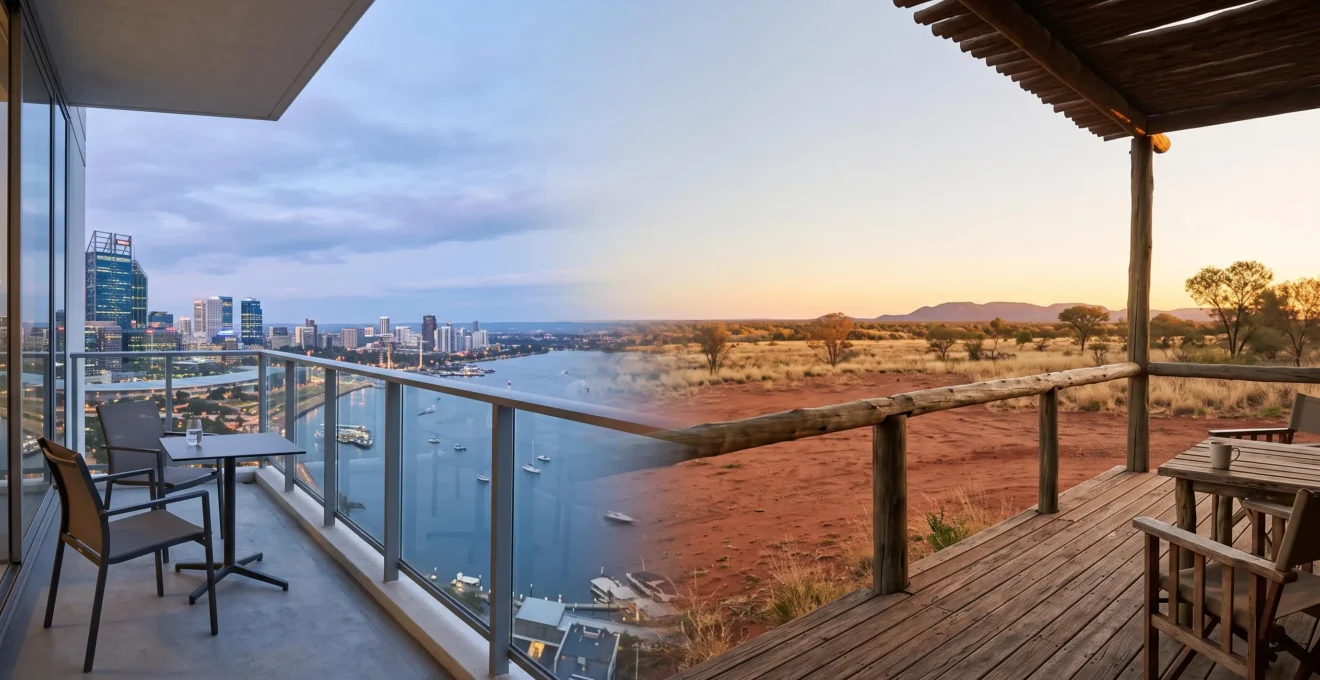
In summary:
- Ditch the one-size-fits-all approach; mixing accommodation types like hostels, hotels, and farmstays unlocks deeper, more varied Australian experiences.
- Strategically sequence your stays, using budget options for active days and serviced apartments for a pre-departure « recovery leg » to manage energy and costs.
- Calculate the « total cost of location » by adding transport fees to cheap suburban rates to avoid false economies.
- For authentic local life, choose accommodation in residential neighbourhoods over tourist-centric CBDs to experience Australia’s true daily rhythm.
Planning an Australian adventure presents a unique challenge: a landscape so vast and diverse that no single type of accommodation can do it justice. Many travellers fall into the trap of booking one category for their entire trip—be it a string of city hotels or a chain of budget motels—overwhelmed by the sheer choice. This approach often leads to a flat, one-dimensional experience and missed opportunities for genuine connection and recovery.
The common advice to « book in advance » or « choose based on budget » barely scratches the surface. It ignores the strategic role lodging plays in shaping your journey. The real art of Australian travel planning isn’t just about finding a place to sleep; it’s about seeing your accommodation as a tool. What if the secret to a more profound and cost-effective trip wasn’t about finding the ‘best’ type of accommodation, but about mastering the art of mixing and matching them?
This guide moves beyond generic lists. We will break down how to strategically sequence luxury, mid-range, and budget stays to enhance your travel experience. You’ll learn to align your lodging with your daily energy levels, calculate the true cost of a location beyond its nightly rate, and discover why a quiet suburban street can offer a richer taste of Australia than a bustling city-centre hotel. It’s time to shift from simply booking rooms to architecting an accommodation strategy that elevates your entire Australian journey.
This article provides a structured approach to making those choices. The following sections break down the key strategies for building an accommodation plan that aligns perfectly with your itinerary and travel goals.
Summary: A Strategic Guide to Australian Accommodation
- Why Mixing Accommodation Types Delivers Better Australian Experiences Than One Category
- How to Sequence Luxury, Mid-Range, and Budget Stays for Trip Value and Recovery
- City Hotels or Rural Retreats: Which Accommodation for Rest or Immersive Experiences?
- The Cheap Accommodation Location That Costs More in Daily Transport Than Savings
- When to Book Australian Accommodation for Availability Without Losing Money on Early Bookings?
- Why Residential Neighborhood Stays Reveal More Real Australia Than CBD Hotels
- Safari Tents or Eco-Pods: Which Glamping Structure Balances Comfort and Immersion?
- How to Choose Accommodation Neighborhoods That Deliver Local Life, Not Tourist Zones
Why Mixing Accommodation Types Delivers Better Australian Experiences Than One Category
Committing to a single accommodation category for an entire Australian trip is like eating the same meal every day—it’s functional, but you miss out on a world of flavour. The most rewarding travel itineraries embrace variety, treating each change in lodging not as an inconvenience, but as a deliberate shift in perspective. Each type of accommodation unlocks a different kind of local knowledge and a unique style of experience. A city hotel provides curated, professional recommendations, while a hostel offers a firehose of peer-to-peer tips from fellow travellers.
While hotels remain a dominant force, with recent annual hotel performance data showing a national occupancy rate of 72.6%, this statistic doesn’t capture the full picture of travel experiences available. The true value lies in stepping outside this single channel. A farmstay or rural pub offers an unfiltered look into the working life of a region, providing insights you’d never get from a concierge. A night in a hostel can yield invaluable, up-to-the-minute route advice that saves you time and money on the road ahead.
The core principle of this strategy is to view each accommodation as an information source. By mixing high-end stays with budget options and rural retreats, you create a richer, more textured journey. You are not just changing your bed for the night; you are intentionally changing your lens on Australia. This blend ensures you get both the polished highlights and the authentic, unscripted moments that make a trip truly memorable. It’s the most effective way to balance comfort, budget, and genuine discovery.
How to Sequence Luxury, Mid-Range, and Budget Stays for Trip Value and Recovery
A strategic accommodation plan isn’t just about mixing types; it’s about sequencing them intelligently. The order of your stays can dramatically impact your budget, energy levels, and overall enjoyment. A common mistake is to front-load luxury, leaving a depleted budget for the rest of the trip. A smarter approach is to match the accommodation’s cost and comfort level to the intensity of your daily activities. Use functional, budget-friendly motels or hostels for transit days or when you’ll be out exploring from dawn till dusk. Save the more expensive, experience-rich lodging for days when the accommodation itself is a key part of the destination.
One of the most powerful sequencing tactics is creating a « recovery leg » at the end of your trip. After weeks of adventure, especially through the rugged Outback or on long drives, fatigue sets in. The final 48 hours before a long-haul flight are crucial for rest and organisation. This is the perfect time to book a self-serviced apartment. These properties combine hotel essentials with home comforts like laundry facilities, a full kitchen, and separate living spaces, providing the ideal environment to rest, do a final load of washing, and repack luggage without feeling cramped.
This final, comfortable stay isn’t an indulgence; it’s a functional necessity. Choosing an apartment near your airport transfer point rather than in the city centre further reduces last-day transit stress, ensuring you head home feeling restored, not frazzled. This thoughtful sequencing transforms your final days from a frantic rush into a calm, controlled conclusion to your journey.
As you can see, the feeling of relief and restoration is palpable. This kind of recovery is essential for processing the incredible experiences of your trip and ending on a high note. By planning this « recovery leg » in advance, you build a functional buffer into your itinerary that pays dividends in comfort and peace of mind.
City Hotels or Rural Retreats: Which Accommodation for Rest or Immersive Experiences?
The choice between a bustling city hotel and a quiet rural retreat boils down to one question: what is the primary goal of that specific leg of your journey? Is it about active exploration or quiet immersion? Matching your accommodation to the day’s intended energy level and experience type is key to maximising value. It makes little sense to pay a premium for a luxury lodge with stunning views if you plan to be out on tours all day. For such action-packed days, a simple, clean, and functional motel provides everything you need without the unnecessary expense.
Conversely, a beautiful location or a dedicated day of downtime is where a unique property can become a destination in itself. A luxury lodge, a farmstay, or a boutique retreat can provide a memorable, immersive experience that defines that part of your trip. The goal is to invest in high-quality accommodation when you have the time to enjoy it. This mix-and-match approach, applied across a single itinerary, ensures you’re spending your money where it delivers the most impact.
Different accommodation types are built to deliver different styles of immersion. Hostels foster social, peer-to-peer connections, while farmstays offer a hands-on, participatory experience. Understanding these nuances allows you to be highly intentional with your choices.
| Accommodation type | Typical setting | Immersion style | Best suited for |
|---|---|---|---|
| Hostel (YHA / private network) | Urban or coastal hub | Peer-to-peer, social | Budget travellers wanting shared local tips |
| Pub-style ‘hotel’ | Town centre or rural crossroads | Lively, unstructured | Travellers wanting cheap, characterful local colour |
| Farmstay | Remote rural property | Participatory, hands-on | Travellers seeking working-property immersion |
| Boutique / 4-star hotel | City or region centre | Curated, concierge-led | Travellers wanting organised access to a city’s highlights |
This table illustrates how each category serves a distinct purpose. By treating these options as a palette, you can paint a far richer and more varied travel picture than if you were to stick to a single colour.
The Cheap Accommodation Location That Costs More in Daily Transport Than Savings
The allure of a cheap hotel room on the outskirts of a major city can be powerful, but it often masks a significant financial trap. The sticker price is only one part of the equation. Before booking that seemingly great deal, it’s crucial to calculate the ‘Total Cost of Location’. While it’s true that a hotel near a major attraction can charge significantly more, with price differences of up to 30%, the savings can be quickly eroded by hidden expenses.
The most obvious hidden cost is daily transport. The money saved on the room can be spent twice over on train fares, bus tickets, and the inevitable late-night rideshare or taxi when public transport services are reduced. Beyond the financial cost, there’s the equally valuable currency of time. Spending two hours a day commuting is two hours not spent exploring a gallery, enjoying a sunset, or simply relaxing. This is especially true in sprawling Australian cities where distances can be deceptive.
Furthermore, an outer-suburban location can dilute the travel experience itself. You miss the magic of stepping out of your hotel into the morning buzz of a central neighbourhood or the convenience of being able to easily pop back to your room mid-day. The perceived saving on accommodation becomes a tax on both your wallet and your precious holiday time. A slightly more expensive, centrally located room often proves to be the more economical and enjoyable choice in the long run.
Your Checklist for Calculating the ‘Total Cost of Location’
- Note the quoted room rate for the outer-suburb option versus a central option.
- Add the realistic daily public transport cost to reach the CBD and main attractions from that location for all travellers in your group.
- Factor in seasonality; peak tourist periods can widen the rate gap but also increase transport demand and potential delays.
- Add a conservative estimate for late-night rideshare or taxi fares for days you might stay out late.
- Compare the adjusted ‘true’ total cost of the outer-suburban option against the central option before making a final booking.
Running this quick calculation provides a much clearer picture of the real value on offer, protecting you from the classic traveller’s mistake of a saving that isn’t one.
When to Book Australian Accommodation for Availability Without Losing Money on Early Bookings?
Timing your accommodation booking in Australia is a delicate balancing act. Book too early, and you might miss out on last-minute deals or lock yourself into a plan that’s hard to change. Book too late, and you risk facing sold-out signs, especially in high-demand areas or during peak season. The right strategy depends heavily on where and when you’re travelling. For major city events like Sydney’s New Year’s Eve or during primary peak season (late December to late January), the advice is unequivocal: book as far in advance as realistically possible.
During these periods, demand massively outstrips supply, and hotel rates during Sydney’s primary peak season run anywhere from 80% to 150% above off-peak prices. The key here is to secure a flexible or cancellable rate. This gives you the security of a confirmed room while still allowing you to adjust your plans or re-book if a better offer appears closer to the date. The same logic applies to iconic, remote destinations with limited lodging, like Uluru during the dry season (April to October). For these bucket-list locations, booking well in advance is not just recommended; it’s essential.
Conversely, for lower-demand windows or more flexible city stays outside of major events, waiting can pay off. For example, visiting Uluru in the hotter months of December to February typically means lower prices and more availability, allowing for a shorter booking lead time.
The financial impact of peak versus off-peak timing is substantial. This illustrative example for a five-night stay in Sydney highlights the potential cost swing.
| Period | Example hotel cost (5 nights) | Booking condition |
|---|---|---|
| Primary peak (late Dec – late Jan) | AU$2,500 (AU$500/night) | Booked roughly 8 weeks ahead, high competition |
| Off-peak (mid-August) | AU$1,300 (AU$260/night) | Booked roughly 2 weeks ahead, easier deals |
Ultimately, the strategy is to identify the ‘must-secure’ parts of your trip and lock them in early with flexible rates, while allowing for more spontaneity in less constrained parts of your itinerary.
Why Residential Neighborhood Stays Reveal More Real Australia Than CBD Hotels
Central Business District (CBD) hotels offer convenience and a curated, often international, standard of service. They are excellent hubs for accessing major tourist attractions and transport links. However, they rarely offer a genuine insight into the local way of life. For a more authentic experience, consider staying in a residential neighbourhood just outside the city core. This is where you’ll find the true rhythm of a city—the corner cafés with their morning regulars, the quiet parks where locals walk their dogs, and the small, independent shops that form the backbone of a community.
Opting for a residential stay, whether in a short-term rental apartment, a B&B, or a small guesthouse, shifts your perspective from that of a tourist to that of a temporary local. You begin to notice the daily and weekly cadence of the area. For instance, a suburb like North Sydney is a bustling commercial hub on weekdays but transforms into a quiet, village-like community on weekends, centered around its public pool and parks—a pattern invisible to someone staying in a CBD hotel.
This approach is not just for city breaks. It reflects a broader trend in Australian travel. In fact, national tourism data shows that in 2025 nearly half of all domestic overnight travel spending occurs in regional areas outside the major capital cities. This demonstrates that there is immense value and a wealth of experiences to be found by venturing beyond the well-trodden tourist paths. A residential stay is the easiest way to tap into this, providing a richer, more nuanced, and often more affordable, way to experience the real Australia.
Safari Tents or Eco-Pods: Which Glamping Structure Balances Comfort and Immersion?
Glamping in Australia has exploded in popularity, offering a compelling bridge between the raw immersion of camping and the comfort of a hotel. Within this category, the choice of structure—often between a classic safari tent and a modern eco-pod—directly influences the balance of your experience. The decision hinges on how much of a barrier you want between you and the natural world. Safari tents, with their canvas walls, prioritise sensory connection. You hear the rustle of wildlife in the bush, feel the breeze, and wake to the sounds of the dawn chorus, all while enjoying the comforts of a proper bed and amenities.
Eco-pods or cabins, on the other hand, typically feature solid walls, large glass windows, and a higher degree of insulation and climate control. They offer a more « curated » immersion, framing the landscape like a living work of art. This can be ideal for more extreme climates or for travellers who value visual connection but prefer to be shielded from the elements and sounds of the night. There is no right or wrong answer; the choice reflects your personal comfort level and what you seek from the experience. Do you want to feel *in* the environment, or look *at* it from a comfortable cocoon?
The best glamping operators understand this balance and design their structures to maximise comfort without sacrificing the feeling of being in nature.
Case Study: Paperbark Camp’s Safari Tents
Paperbark Camp, a pioneer of Australian glamping in Jervis Bay, illustrates how a safari tent can deliver luxury without losing immersion. Their upgraded tents feature polished hardwood floors, a double canvas roof for insulation, and private open-air ensuites. This design places guests in direct sensory contact with the surrounding bushland—home to kangaroos, possums, and abundant birdlife—while providing a level of comfort comparable to a high-end hotel room. It’s a prime example of how the canvas-walled format can successfully balance hotel-level amenities with an unfiltered connection to the environment.
Ultimately, whether you choose a tent or a pod, the best glamping experiences are those that thoughtfully consider their structure’s relationship with the surrounding landscape. They prove that you don’t have to sacrifice comfort for immersion, or vice versa.
Key takeaways
- Strategic Variety is Key: Don’t stick to one accommodation type. Mixing hotels, farmstays, and serviced apartments creates a richer, more dynamic travel experience.
- Sequence for Success: Plan your accommodation sequence to match your energy and budget, using a comfortable « recovery leg » at the end of your trip to rest and repack.
- Look Beyond the Nightly Rate: Always calculate the « Total Cost of Location, » factoring in transport time and fees to ensure a cheap suburban room doesn’t become a false economy.
How to Choose Accommodation Neighborhoods That Deliver Local Life, Not Tourist Zones
Finding a neighbourhood that offers authentic local life requires a bit of digital reconnaissance before you book. The goal is to identify suburbs that have a genuine community fabric, rather than those built entirely around tourism. Tourist zones are easy to spot: they are dominated by souvenir shops, international chain restaurants, and large hotels. A real neighbourhood, by contrast, is defined by its everyday amenities: local bakeries, independent grocers, a public library, parks filled with residents, and cafés where the barista knows the customers by name.
Using online tools can help you decode a suburb’s character from afar. Real estate websites are surprisingly useful, as their suburb profiles are written to describe the lifestyle and amenities for potential long-term residents. They provide insights into the area’s demographic, its general vibe (e.g., « family-friendly, » « vibrant nightlife »), and the location of key infrastructure like main roads or industrial precincts that might affect the feel of your stay. Government sources can also be invaluable. Council websites often list community events and new developments, while the Australian Bureau of Statistics provides detailed demographic data.
Your Actionable Plan: A Suburb Reconnaissance Checklist
- Check Australian Bureau of Statistics data for the suburb to understand its demographics, age profile, and typical housing.
- Review suburb profiles on real estate sites like Domain or realestate.com.au to gauge the described lifestyle and local amenities.
- Use Google Maps’ Street View to virtually « walk » the streets, noting the mix of businesses (local cafes vs. chain stores) and the general upkeep of the area.
- Cross-check with local council websites for information on major infrastructure projects that could create noise or disruption during your stay.
- Look for evidence of community life, such as local sports grounds, community centres, and parks that appear well-used by residents.
This proactive research allows you to make an informed choice, selecting a home base that will enrich your trip with a genuine sense of place. It’s the difference between observing a city from the outside and feeling, even for a short time, like a part of it.
To craft an unforgettable Australian journey, start by applying these strategic principles. Evaluate your itinerary, match your accommodation to each day’s purpose, and begin the exciting process of planning a trip that is as diverse and dynamic as Australia itself.