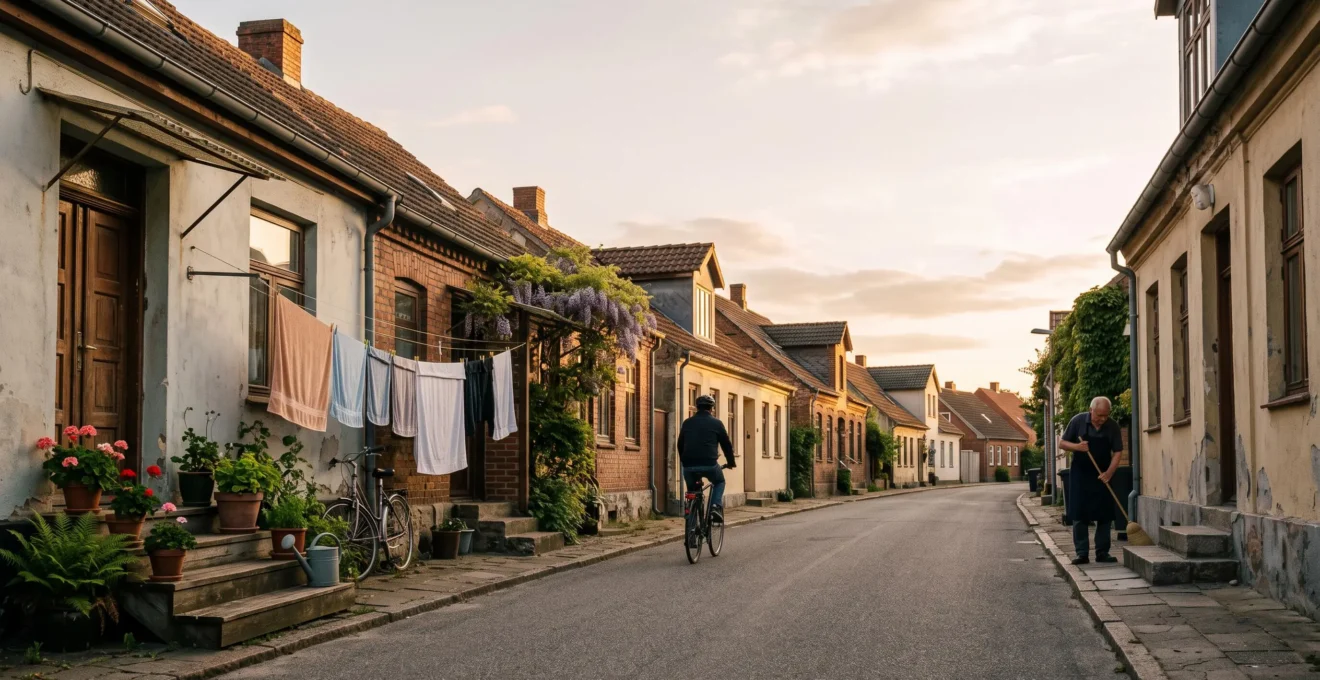
Choosing the right neighbourhood isn’t about avoiding tourists; it’s about learning to read a place’s trajectory before it becomes a hollowed-out tourist zone.
- Star ratings and CBD convenience are misleading indicators of a quality local experience.
- Authenticity has clear signals: a mix of independent businesses, resident activity outside office hours, and creative energy that hasn’t been commercialised.
Recommendation: Stop trusting generic reviews and start doing ‘character research’—analyse a neighbourhood’s social and economic fabric to find a genuine slice of Australian life.
Every savvy traveller has felt the sting of disappointment. You book what looks like a charming apartment in a « vibrant, local » neighbourhood, only to arrive and find it’s a ghost town of key-safes and tourist-menu cafes. The promise of an authentic Australian experience evaporates, replaced by the sterile hum of a short-term rental district. The common advice—stay in the CBD for convenience, trust the five-star reviews—often leads you directly into this trap.
Let’s be honest: the line between a genuinely thriving community and a theme park version of one is becoming finer. Gentrification and the platform economy have a way of discovering, promoting, and ultimately sanitising the very character that made a place special. This process has a predictable lifecycle, and as a traveller, your goal is to get in before the ‘saturation stage’—the point where the original soul is crowded out.
But what if the solution wasn’t just to find a different spot on the map, but to change how you read the map entirely? The real trick is to move beyond surface-level research and learn to decode a neighbourhood’s DNA. It’s about spotting the subtle signals of a place’s social and economic trajectory, allowing you to find accommodation in a community that is alive and breathing, not just photogenic.
This guide will equip you with the strategic framework to do just that. We’ll explore why real Australian life often starts where the CBD ends, how to spot emerging gems, and why your research must go deeper than hotel star ratings. We’ll also cover how to match a neighbourhood’s specific character to your travel style and how to visit as a respectful cultural explorer, not just a consumer.
Summary: Finding a Neighbourhood with a Pulse: Your Guide to Authentic Australian Stays
- Why Residential Neighborhood Stays Reveal More Real Australia Than CBD Hotels
- How to Spot Emerging Authentic Neighborhoods Before They Become Expensive Tourist Zones
- Waterfront or Arts Districts: Which Neighborhood Type Matches Your Travel Interests?
- The Review Mistake of Trusting Hotel Stars Over Neighborhood Character Research
- When to Stay in Each Neighborhood for Events or to Avoid Seasonal Disruptions?
- Why Australian Multicultural Neighborhoods Feel Different from European Ethnic Quarters
- Why Independent Luxury Hotels Deliver More Australian Character Than International Chains
- How to Experience Australia’s Multicultural Neighborhoods Like a Respectful Cultural Explorer
Why Residential Neighborhood Stays Reveal More Real Australia Than CBD Hotels
The long-standing travel wisdom is to book accommodation in a city’s Central Business District (CBD) for unparalleled convenience. And for a first-time, tick-the-boxes trip, it makes sense. But if you’re chasing the real rhythm of Australian urban life, the CBD is often the last place you’ll find it. These zones are increasingly optimised for office workers and brief, transactional tourism, often emptying out after 6 PM, leaving a sterile, quiet void where a community’s nightlife should be.
The global shift to remote and hybrid work has further reshaped the urban core. With fewer people commuting daily, the daytime vibrancy of many CBDs has diminished. The lifeblood of the city—the messy, wonderful, everyday interactions—has flowed outwards into the surrounding residential suburbs. It’s here you’ll find the cafes where locals actually get their morning coffee, the parks filled with families after school, and the small, independent grocers and bakeries that serve a community, not just a transient workforce. A stay in a residential area means you witness the city’s true pulse, not just its commercial heartbeat.
Choosing a residential neighbourhood stay is a deliberate trade-off: you might sacrifice a five-minute walk to a major landmark for a ten-minute tram ride, but what you gain is immeasurable. You gain access to the city as it is lived, not just as it is presented. You see the morning dog-walkers, the evening joggers, and the neighbours chatting over their fences. This is the texture of ‘real Australia’ that a high-rise hotel in the CBD, however luxurious, simply cannot deliver.
How to Spot Emerging Authentic Neighborhoods Before They Become Expensive Tourist Zones
The lifecycle of a cool neighbourhood is brutally predictable. It begins with artists and creatives seeking affordable spaces, followed by independent cafes and boutiques. Then come the travel bloggers, the Airbnb investors, and finally, the tourist crowds that inevitably sand down the neighbourhood’s original gritty charm into a smooth, marketable product. The key is learning to spot a place in its vibrant ’emerging’ phase, before it hits the ‘saturation stage’.
So, what are the authenticity signals you should be looking for? It’s a form of urban archaeology. First, look for a healthy mix of the old and the new. A street with a third-wave coffee shop next to a 50-year-old tailor and an unpretentious cobbler is a great sign. It shows new energy is flowing in without completely displacing the established community. A street with five brunch spots and three souvenir shops is a red flag. Second, pay attention to the street art. Is it genuinely creative and evolving, or is it a designated ‘selfie wall’ sponsored by a brand? Raw, unsanctioned art is often a sign of an active creative pulse.
Another crucial signal is the presence of ‘third places’ that are not purely transactional: community gardens, public libraries with active noticeboards, local pubs with scuffed floors, and parks that are used for more than just a quick photo. These are indicators of a resident population that socialises and engages with its environment. The ultimate warning sign of a neighbourhood in the saturation stage is the density of short-term rentals. A quick scan on booking platforms can be revealing; if more than half the apartments in a building or block are holiday lets, as seen in places like Barcelona’s Gòtic Quarter, the local character has likely been hollowed out. You’re no longer a visitor in a community; you’re a customer in a hotel district with no walls.
Waterfront or Arts Districts: Which Neighborhood Type Matches Your Travel Interests?
Simply choosing an « arts district » or a « waterfront neighbourhood » is not enough. These generic labels mask a huge diversity of experiences. The savvy traveller’s job is to dig deeper and match the specific sub-type of a neighbourhood to their personal travel style. A « waterfront » location, for instance, can mean anything from a gritty, industrial working port to a manicured, tourist-heavy promenade. Understanding these nuances is key to avoiding disappointment.
As an example, a traveller seeking unpolished local life might love the noisy, authentic atmosphere of a working port but would feel stifled by the generic chain restaurants of a pristine promenade. Conversely, a first-time visitor wanting postcard views might prefer the promenade. This highlights the need for what we call ‘character research’—investigating the true nature of a place beyond its label. The following table, based on insights from hospitality industry analysis, breaks down the different waterfront experiences.
| Sub-type | Atmosphere | Best for | Watch out for |
|---|---|---|---|
| Working Port | Gritty, noisy, industrial | Travelers wanting authentic, unpolished local life | Limited dining options, uneven walkability at night |
| Manicured Promenade | Clean, touristy, expensive | First-time visitors wanting postcard views | Generic chain restaurants, inflated prices |
| Residential Marina | Quiet, exclusive, low-key | Travelers seeking rest over stimulation | Can feel isolated after dark, fewer amenities |
The same logic applies to an « arts district. » Is it a hub of working artist studios and independent galleries, or has it become a sanitised zone of high-end commercial galleries and souvenir shops? The former offers real creative energy and the chance to interact with makers, while the latter is a more passive, consumer-focused experience. Your research should involve looking at the specific businesses listed on a map, reading local blogs (not just travel guides), and checking the events calendar for things like open studio days versus large-scale, ticketed art fairs. This deeper dive ensures the neighbourhood’s character truly aligns with your interests.
The Review Mistake of Trusting Hotel Stars Over Neighborhood Character Research
In the age of endless online reviews, it’s easy to believe that a 4.9-star rating on a property is a guarantee of a great stay. This is a critical mistake. While a property’s rating reflects the quality of the linen and the host’s communication, it tells you almost nothing about the character, safety, or soul of the block it sits on. A five-star apartment in a neighbourhood that dies at 6 PM or is dominated by other tourist rentals is still a recipe for a disappointing, inauthentic trip.
The problem is compounded by rating inflation. For example, platform data shows that on Airbnb, nearly 95% of reviewed ‘Guest Favorite’ stays receive a five-star rating. When almost everything is rated as ‘perfect’, the rating itself becomes meaningless as a differentiator. Your focus must shift from the property’s stars to the neighbourhood’s substance. This requires active ‘character research’. As one travel advisor reflects on the ethics of tourism:
The more I travel myself and the more work I do in the travel industry, the more I think about the ethics of it — having lived in tourist destinations like New York City, Washington D.C., and New Orleans has shown me the effect that tourism can have on a city’s residents, for better and worse.
– Kayla, Kayla Wordsmith
This ethical lens is part of good character research. You are not just choosing a place to sleep; you are choosing a community to temporarily join. This means you have a responsibility to understand its fabric. Instead of just reading property reviews, spend your time using Google Street View, reading local online forums or subreddits, and checking for the proximity of genuine local amenities—not just tourist services.
Your Checklist for Vetting the Neighbourhood, Not Just the Property
- Check for neighbourhoods with a reputation for safety, using reviews and local safety guides for insight.
- Research the dining and entertainment options actually available nearby to confirm there’s enough to do after dark.
- Consider the neighborhood’s proximity to public transportation hubs such as subway stations, bus stops, or train stations.
- Cross-reference property reviews with discussions on a local subreddit or forum to see what residents themselves say about the street.
- Use a map to check for a healthy mix of businesses: bakeries, tailors, and bookshops, not just souvenir stores and currency exchanges.
When to Stay in Each Neighborhood for Events or to Avoid Seasonal Disruptions?
Choosing the perfect neighbourhood isn’t just a question of space; it’s also a question of time. A quiet, residential street can be transformed into a noisy, congested thoroughfare by a major festival, a sporting event, or even seasonal school holidays. Being aware of a city’s event calendar is not just about finding things to do; it’s a crucial strategic tool for avoiding—or intentionally joining—areas of disruption.
The impact of a major event creates a ‘disruption zone’ that ripples outwards. For instance, the annual Montreux Jazz Festival brings nearly 250,000 people into a small Swiss city, overwhelming not just the immediate festival area but also the transport and accommodation in surrounding neighbourhoods. This effect is quantifiable; festival pricing data from Rio Carnival shows an 80% jump in average nightly rates, a surge that affects a wide radius around the main event. If your goal is a quiet, restful trip, staying on the edge of this zone can be a disaster. Conversely, if you’re attending the event, knowing the extent of the disruption zone helps you book accommodation that is convenient but not prohibitively expensive.
Anticipating this impact requires more than a quick Google search. Your research should include checking the official city council website for road closures, looking at public transport apps for planned service changes, and reviewing local news archives for reports on the impact of the same event in previous years. For recurring events, check hotel and rental prices for the same dates last year to get a realistic picture of the price inflation you can expect. This temporal awareness is the final layer of savvy neighbourhood selection, ensuring you’re not caught by surprise by a price surge or a wave of crowds you didn’t plan for.
Why Australian Multicultural Neighborhoods Feel Different from European Ethnic Quarters
For travellers familiar with Europe or North America, the concept of a multicultural or ‘ethnic’ neighbourhood often conjures images of distinct, historically segregated quarters—a « Chinatown » or a « Little Italy » with clear boundaries. In Australia, the experience is often more integrated and fluid. Decades of post-war immigration from across the globe have created a different model of multiculturalism, one that is less about distinct enclaves and more about a ‘mosaic’ of overlapping influences.
In a typical Australian multicultural suburb, you are more likely to find a Vietnamese bakery next to a Lebanese butcher shop, across the street from a Greek deli. The cultures coexist and blend on a street-by-street level, rather than being contained within separate districts. This creates a unique sensory experience for the visitor. The food landscape is a perfect barometer of this integration; it’s a dynamic fusion where culinary traditions are shared and adapted, resulting in a vibrant, and sometimes surprising, local cuisine.
This integrated model means that as a traveller, you don’t ‘go to the Italian quarter for dinner’. Instead, you go to a suburb like Coburg in Melbourne or Harris Park in Sydney and experience a tapestry of cultures woven together. This can be more subtle and requires a keener eye to appreciate. Rather than looking for the grand gate of a Chinatown, you should look for the smaller signals: the variety of languages on shop signs, the diverse range of produce in the green grocers, and the mix of community centres and places of worship. Understanding this fundamental difference is key to truly appreciating the unique character of Australia’s urban fabric.
Why Independent Luxury Hotels Deliver More Australian Character Than International Chains
When you opt for a luxury stay, the temptation is to choose a familiar international brand—a name that guarantees a certain standard of service and amenities. However, in doing so, you often sacrifice the very thing you’re travelling for: a sense of place. Global hotel chains are masters of consistency, which means a room in Sydney can feel unnervingly similar to one in Singapore or Seattle. They offer a predictable experience, but rarely an authentic one.
Independent luxury and boutique hotels, on the other hand, are free to build their identity around their location. Their design often incorporates local materials and showcases Australian artists and designers. Their restaurants are more likely to champion regional produce and wines, and their concierge may offer more nuanced, personal recommendations than a script from corporate headquarters. These establishments are not just selling a bed for the night; they are selling a story about their city. They are an expression of local character, not an imposition of a global brand onto a local setting. This resonates deeply with the modern traveller’s mindset.
The demand for this kind of travel is not just anecdotal; industry research suggests that this appetite for uniqueness is a major market force, with a majority of younger travellers prioritising spending on unique experiences over material goods. Choosing an independent hotel is a direct investment in that principle. It’s a vote for local business, local design, and a style of hospitality that is rooted in its environment. While the thread count might be the same, the experience is infinitely richer and more memorable because it could only have happened in that specific place.
Key takeaways
- Authenticity is not an accident; it requires active research into a neighbourhood’s social and economic fabric.
- Generic indicators like star ratings and CBD locations are often misleading; focus on signals like business mix and resident activity.
- Understanding the lifecycle of a neighbourhood—from emerging to saturated—is key to visiting before its character is diluted.
How to Experience Australia’s Multicultural Neighborhoods Like a Respectful Cultural Explorer
You’ve done your research and found the perfect neighbourhood—a living, breathing community, rich with local character. The final, and most important, step is to engage with it respectfully. The goal is to be a cultural explorer, not a passive consumer. This mindset shift is about contributing to the neighbourhood’s life, however briefly, rather than just extracting an experience from it. It’s a sentiment that is becoming more widespread; recent global travel research shows that 53% of travelers are now conscious of their impact on local communities.
Respectful exploration is practiced through small, deliberate habits. It’s about spreading your economic footprint. Instead of spending all your money at the one highly-rated cafe, buy bread from the local bakery, get a newspaper from the newsagent, or have a drink at the unpretentious corner pub. This distributes the economic benefit of your visit more widely and gives you a more rounded sense of the community. It’s also about engaging with curiosity and humility.
Here are a few small habits that can transform your visit from passive tourism to a genuine cultural exchange:
- Spend money across a variety of local businesses—the grocery store, the tailor, the bookstore—not just the most photographed restaurant.
- Remember that tourism can affect a city’s residents for better and for worse, so don’t assume your presence is automatically welcome. Be mindful of noise and public space.
- Learn a few courtesy phrases in the neighbourhood’s dominant everyday language, not just « G’day. » This shows effort and respect.
- Ask shopkeepers and residents about the story behind a dish or object instead of only asking its price.
Ultimately, being a respectful explorer means remembering that you are a guest in someone else’s home. The neighbourhood is not a backdrop for your holiday photos; it’s a complex social ecosystem. By engaging with it thoughtfully, you not only enrich your own travel experience but also honour the community that makes it special.
By applying this strategic lens to your accommodation choices, you can consistently bypass the tourist traps and find yourself in the heart of real, living Australian communities. The next step is to start practicing this ‘character research’ for your next destination.