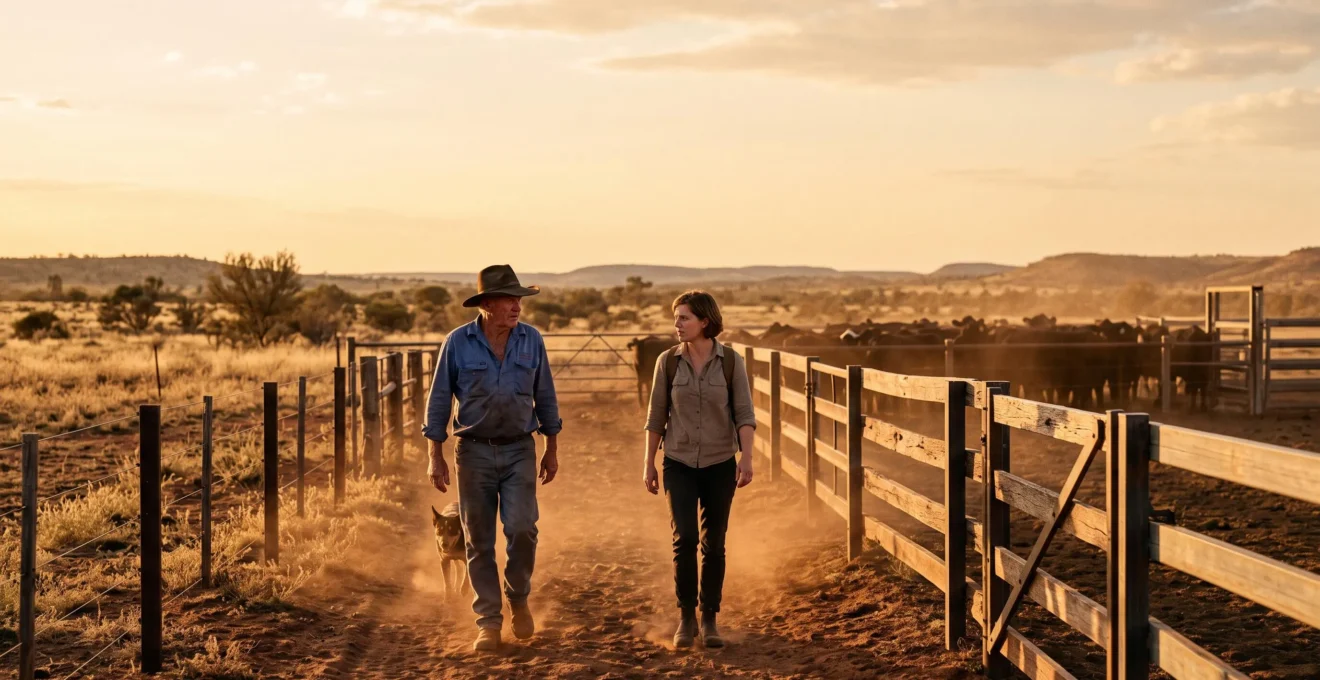
The key to an authentic Australian farm stay is shifting your mindset from a hotel guest demanding entertainment to a temporary apprentice contributing to a working enterprise.
- Genuine properties operate on an agricultural clock, where the needs of livestock and land dictate the daily rhythm, not a tourist’s itinerary.
- Meaningful participation involves respectful observation and low-risk help, not interference with critical farm operations.
Recommendation: Prioritise properties that clearly define themselves as working stations or farms and communicate the expectation of immersion over luxury.
The vision of an Australian outback adventure often involves vast, red-earth landscapes, the smell of eucalyptus after rain, and a connection to the rugged soul of the country. For many travellers seeking this reality, a farm stay seems like the perfect gateway. Yet, a growing disconnect exists between this dream and the reality offered. The rise of agritourism has created a spectrum of experiences, from genuine working properties to what can only be described as « tourist theatre »—staged, sanitised versions of farm life designed for passive entertainment.
Common advice often points to petting animals or collecting eggs, but these activities barely scratch the surface of a complex, high-stakes agricultural operation. The real challenge for a rural-curious traveller is learning to distinguish a property offering true pastoral immersion from one that simply uses the farm as a rustic backdrop for a hotel-like service. But what if the secret wasn’t just about choosing the right place, but about adopting the right mindset? The crucial shift is from being a client to becoming a temporary apprentice, where you value observation and contribution over catered entertainment.
This guide provides a framework for making that distinction. We will explore why the outback offers an unparalleled glimpse into rural life, how to participate meaningfully without being a hindrance, and how to identify the mindset that separates a respectful guest from a demanding tourist. By understanding the operational rhythm of a real farm, you can find an experience that is truly transformative, not just transactional.
To help you navigate these choices, this article breaks down the essential elements of finding a genuine working farm stay. From understanding the difference between property types to knowing when to book for seasonal activities, here is your guide to authentic rural immersion.
Summary: Finding an Authentic Working Farm Stay in Australia
- Why Outback Farm Stays Reveal Australian Rural Life Cities and Coasts Cannot Show
- How to Participate in Farm Activities Without Slowing Work or Endangering Yourself?
- Cattle Stations or Sheep Properties: Which Outback Farm Experience Matches Your Interests?
- The Farm Stay Mindset That Treats Farmers as Hotel Staff, Not Cultural Hosts
- When to Book Outback Farm Stays for Seasonal Activities Like Mustering or Shearing?
- Why Regional Agricultural Shows Reveal More Real Australia Than City Tourist Events
- City Hotels or Rural Retreats: Which Accommodation for Rest or Immersive Experiences?
- How to Find Local Events Australians Actually Attend, Not Tourist Festivals
Why Outback Farm Stays Reveal Australian Rural Life Cities and Coasts Cannot Show
The urban and coastal fringes of Australia, while beautiful, present a curated version of the nation’s identity. To understand the foundational character of the country, you must go inland, where life is shaped by the vastness of the land and the realities of agriculture. A working outback farm stay is not just a change of scenery; it’s an immersion into a different tempo of life, one governed by an operational rhythm tied to seasons, weather, and animal welfare, not the 9-to-5 clock of city life. This is a significant and growing part of the national tourism landscape, with farm-visit tourism involving 3.3 million trips and generating $4.2 billion in visitor spending.
On a genuine station, you witness how the entire day is structured around essential tasks—a pre-dawn start to move stock before the heat, the constant maintenance of fences and water points, and the long-term planning for drought or flood. This environment reveals the resilience, ingenuity, and deep connection to the land that is often missing from coastal cities. The experience is about understanding a complex ecosystem, not just enjoying a rustic aesthetic.
The case of Curringa Farm in Tasmania, a sixth-generation working sheep property, perfectly illustrates this. Hosts Tim and Jane Parsons manage a flock of 3,000 sheep, and while they welcome guests, the farm’s daily schedule is dictated by the needs of the animals and the land. Guests don’t just see a shearing demonstration; they witness an integral part of a year-long cycle of production that is fundamental to the farm’s survival. This is the authenticity that cities and coasts simply cannot replicate.
How to Participate in Farm Activities Without Slowing Work or Endangering Yourself?
The desire to « get your hands dirty » is at the heart of wanting an authentic farm stay, but it comes with a critical responsibility. A working farm is a place of business with inherent risks and tight schedules. The biggest mistake a visitor can make is assuming their desire for an « experience » trumps the operational needs of the property. The solution lies in adopting an apprentice mindset: your role is to learn, observe, and assist where it is safe and genuinely helpful, not to demand to be entertained or to interfere with skilled work.
Smart hosts facilitate this through structured, low-interference participation. At Bullara Station on the Ningaloo coast, for instance, guest involvement is built around communal activities like burger nights, designated walking trails, and guided tours. These allow visitors to engage with station life and its people without disrupting core work like mustering cattle. It’s about being present and observant, asking thoughtful questions, and being ready to help with low-risk tasks like feeding poddy calves, collecting wood for a fire, or helping in the garden.
Never expect to operate heavy machinery, handle unpredictable livestock without supervision, or join in on highly skilled tasks like shearing. Your participation should add value, not create a liability or slow down essential work. The focus is on learning through proximity and contributing in small, meaningful ways.
Your Action Plan: Adopting the Farm Apprentice Mindset
- Acclimatisation and Orientation: Upon arrival, take time to understand the property’s rules, safety zones, and daily rhythm before seeking tasks.
- Learn Essential Skills First: Watch and learn. Before asking to help, observe how a task is done to understand its purpose and risks.
- Match Tasks to Your Skills: Be honest about your experience. Offer to help with tasks that fit your abilities, such as gardening or simple maintenance, rather than complex agricultural work.
- Build Trust for More Responsibility: Demonstrate competence and respect. As your hosts see you are reliable and safety-conscious, they may offer you more involved responsibilities.
Cattle Stations or Sheep Properties: Which Outback Farm Experience Matches Your Interests?
The classic image of the Australian outback is often divided between the sprawling cattle stations of the north and the vast sheep properties of the south. Your choice between them will fundamentally shape your experience. A cattle station often involves vast, unfenced territories, with life revolving around mustering, branding, and managing water sources (bores and dams). The scale can be immense, and activities may involve long days on horseback or in a 4WD, checking on stock spread over thousands of hectares.
In contrast, a sheep property is typically more contained, with a network of fences dividing the land into paddocks. The rhythm is dictated by the wool production cycle: lambing, marking, and the intense, highly skilled period of shearing. You’re more likely to be involved in activities like checking on lambing ewes or helping to move a mob of sheep from one paddock to another. The work can feel more intricate and hands-on, focused on the health of the flock and the quality of the wool.
However, the choice is no longer just about the type of livestock. A growing number of properties are diversifying into conservation and ecological stewardship. Wooleen Station in Western Australia, for example, has moved beyond conventional stocking rates to implement a radical land-management program. By reducing cattle numbers and allowing dingoes to roam free, they are actively restoring the degraded rangelands. A stay here offers a profound lesson not just in pastoralism, but in large-scale ecological regeneration, showing how modern farming is evolving to balance production with conservation.
The Farm Stay Mindset That Treats Farmers as Hotel Staff, Not Cultural Hosts
The most significant pitfall in the farm stay experience is a failure of mindset. Arriving on a working property with the expectations of a hotel guest—demanding specific meal times, requesting curated activities on a whim, or complaining about the lack of amenities—is a recipe for disappointment for both you and your host. Farmers who open their homes are not hotel managers; they are cultural hosts sharing their livelihood and way of life. They are running a complex, often stressful business, and hosting visitors is an addition to, not a replacement for, their core work.
Your hosts are your window into a unique culture, offering knowledge and stories you cannot find in any guidebook. Treating them as service staff is not only disrespectful but also robs you of the very authenticity you came to find. The relationship should be one of mutual respect, curiosity, and a willingness to adapt to the farm’s schedule. The right mindset is one of a guest in a home and a temporary apprentice in a workplace.
The Downunder Farmstays Philosophy: Joining the Family
The model used by operators like Downunder Farmstays frames the experience perfectly. They don’t sell « accommodation »; they facilitate an invitation for guests to « join an Aussie family on their farm. » This simple but profound reframing establishes the correct relationship from the outset. It implies you are entering a private space, will share in the family’s daily life, and will be treated with warmth and generosity—in exchange for respect and understanding of their work-driven lifestyle. This is the essence of the ‘apprentice, not client’ relationship that a genuine farm stay should foster.
When to Book Outback Farm Stays for Seasonal Activities Like Mustering or Shearing?
Timing is everything when it comes to witnessing iconic outback activities. Unlike a resort where the attractions are available year-round, a working farm’s calendar is dictated by immovable seasonal events. If your dream is to see a full-scale cattle mustering or the organised chaos of a shearing shed in full swing, you cannot simply book for any week of the year. These are intense, short-lived periods of work that are planned months in advance.
Generally, mustering on northern cattle stations occurs during the cooler, drier months, typically from April to September. Shearing seasons vary significantly across Australia depending on the climate and breed of sheep, but major shearing periods often fall in spring or autumn. The crucial first step is to communicate directly with the property. Ask them about their operational calendar and express your interest in a particular activity. Be prepared to be flexible, as dates can shift due to weather or other unforeseen factors.
However, it’s a mistake to believe that only these peak seasons are worthwhile. The « off-season » is often when you can have a more intimate and hands-on experience, as your hosts may have more time to spend with you. As the editorial team at Workstay.com.au notes in their guide on working outback farms:
The right times of year will be different for each state, but there is plenty of maintenance around the stations and work around the house to consider.
– Workstay.com.au editorial team, Working Outback Farms Australia guide
There is always work to be done on a farm, whether it’s mending fences, maintaining machinery, or tending to infrastructure. Booking outside of peak season can lead to deeper immersion and a better understanding of the year-round effort required to run a property.
Why Regional Agricultural Shows Reveal More Real Australia Than City Tourist Events
To truly immerse yourself in rural Australia, you must look beyond the farm gate. While a farm stay provides a deep dive into a single enterprise, a regional Agricultural Show (or « Ag Show ») offers a panoramic view of the entire community and its values. These are not tourist festivals; they are century-old institutions that are the lifeblood of the district. They are where the community comes together to compete, socialise, and celebrate its identity.
Unlike a city event with generic food trucks and hired entertainment, an Ag Show is a showcase of genuine rural skill and pride. Here you will see woodchopping competitions where generations of the same family compete, livestock judging where a year’s worth of breeding is scrutinised, and equestrian events that display incredible horsemanship. You’ll find pavilion displays from the Country Women’s Association (CWA) featuring prize-winning cakes, jams, and crafts, which represent the heart of rural domestic life and community service.
Attending an Ag Show is like seeing the entire ecosystem of the region in one place. It’s where you’ll overhear conversations about rainfall, stock prices, and local politics. It’s an un-staged, authentic gathering that reveals the passions, pressures, and pride of rural Australians in a way no curated city event ever could. Planning your trip to coincide with a show like the Longreach Show in Queensland or the Deniliquin Ute Muster in New South Wales can elevate your trip from a simple holiday to a profound cultural immersion.
City Hotels or Rural Retreats: Which Accommodation for Rest or Immersive Experiences?
The choice of accommodation is the single most important decision defining the nature of your trip. It exists on a spectrum of immersion, and understanding where your preference lies is key to avoiding disappointment. On one end, a city hotel offers comfort, convenience, and a total disconnect from rural life. On the other, a working farm stay prioritises active participation over passive comfort, demanding flexibility and an apprentice mindset. This type of travel represents a high-value segment, as international agritourism visitors spent on average $3,448 per trip, significantly higher than typical tourists.
In between lie rural retreats and « tourist farms. » A rural retreat offers the scenery of the countryside with the service of a hotel. The focus is on rest and relaxation, with manicured views and curated comfort. A tourist farm goes a step further, offering scripted interactions like scheduled animal feedings or tractor rides. While enjoyable, especially for families with young children, these are a form of « tourist theatre »—a performance of farm life, not the real thing.
The following table clarifies this spectrum, helping you match your accommodation choice to your travel goals—whether you seek pure rest or genuine immersion.
| Accommodation Type | Nature of Guest Experience | Level of Immersion |
|---|---|---|
| City Hotel | Total disconnect from rural life | None |
| Rural Retreat | Passive scenery, curated comfort | Low |
| Tourist Farm | Curated, scripted interaction | Moderate |
| Working Farm Stay | Active participation in real farm operations | High |
A working farm stay is for the traveller who wants to understand the ‘why’ and ‘how’ behind the scenery. It’s for those who find value in shared work and authentic connection, and who understand that real immersion is a privilege, not a product.
Key Takeaways
- An authentic farm stay requires an « apprentice mindset, » prioritising learning and contribution over the expectations of a hotel guest.
- The daily life on a working property is dictated by its « operational rhythm »—the non-negotiable schedule of seasons, weather, and livestock needs.
- True participation is about respectful observation and low-interference help, not disrupting critical or high-risk farm work.
How to Find Local Events Australians Actually Attend, Not Tourist Festivals
The final layer of a truly immersive rural trip is connecting with the wider community, and the best way to do that is by finding the events that locals actually attend. The key is to look for gatherings built around community, industry, or sport, rather than those explicitly marketed to tourists. Forget the generic « outback festivals » you see in glossy brochures and look for the local rodeo, the annual campdraft, a regional race meeting, or the previously mentioned Agricultural Show.
How do you find them? Start by looking at the local council or shire website for the region you plan to visit. They will have a community calendar listing these events. Follow local community Facebook groups or the pages of local pubs and general stores, as they are often the hub for what’s happening. A significant portion of this activity occurs in key regions; for example, regional NSW attracted 32.7% of domestic overnight visitors participating in agritourism nationally, making its local event calendars particularly rich.
The nature of these events reveals their authenticity. A tourist festival is designed to entertain you. A local event is designed to serve its community, and you are a welcome observer. A perfect example of a community-centric event is the AgriTourism Summit hosted by Destination NSW. While an industry event, it demonstrates how genuine rural gatherings form around real needs—in this case, bringing operators together to grow their businesses—rather than manufactured entertainment. Attending a local football or cricket match, visiting a weekend market, or going to a race day offers a real, unvarnished slice of Australian life.
Ultimately, choosing a working farm stay over a tourist-oriented retreat is a conscious decision to pursue connection over comfort and reality over romance. It’s about embracing the apprentice mindset and finding value in the quiet moments of observation and the small acts of contribution. By doing so, you don’t just visit the Australian outback—you become a small, respectful part of it.