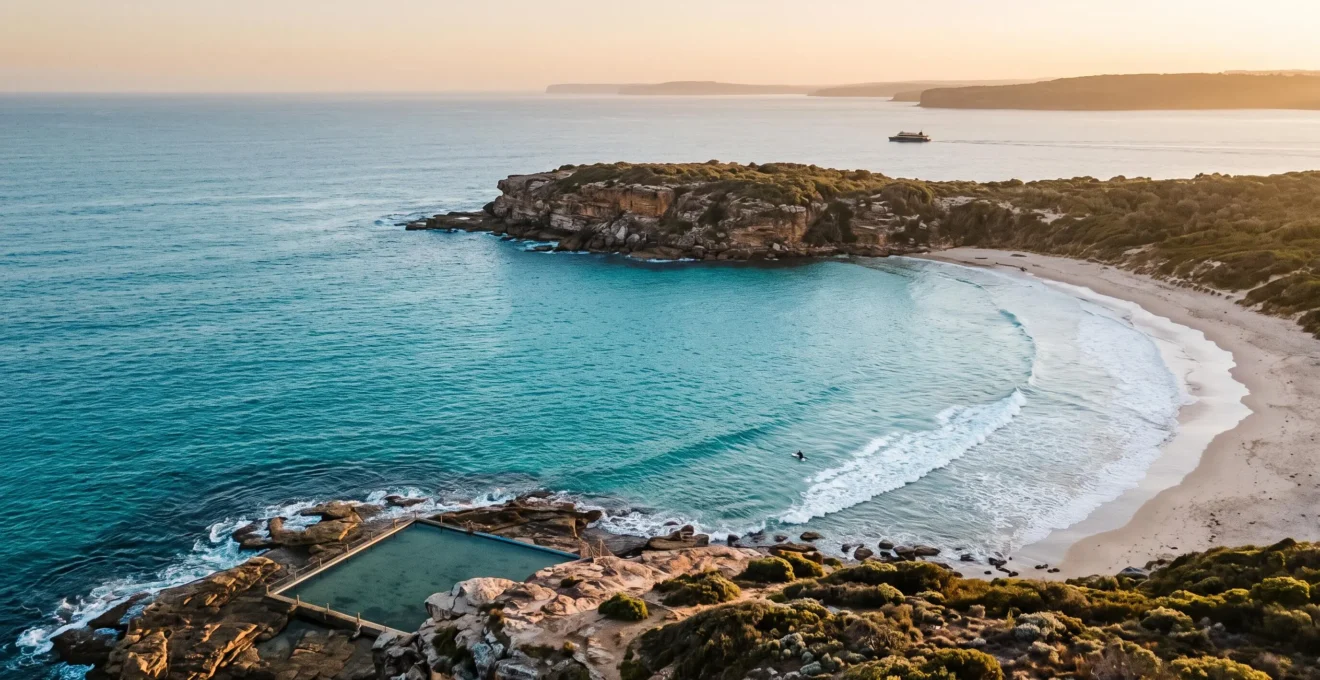
The secret to finding your perfect Australian coastal city isn’t choosing a place, but matching your personality to its unique « coastal rhythm »—the daily tempo set by the ocean.
- Australia’s beach culture is a deeply integrated part of urban life, not a separate tourist activity, creating unique social ecosystems like the « saltwater C-suite. »
- Authentic experiences are found in residential neighbourhoods and by understanding the central role of local institutions like surf lifesaving clubs, not in CBD hotels or « overloved » trendy suburbs.
Recommendation: Instead of focusing on city names, use this guide to diagnose your preferred pace of life—from high-energy city beaches to slow heritage towns—to find your true Australian match.
For any urban explorer who loves the energy of a city but craves the magnetic pull of the sea, Australia’s coastal capitals seem like paradise. Yet, scrolling through guides can be a frustrating exercise in sameness. Endless photos of the Sydney Opera House and Melbourne’s laneways don’t answer the real question: where will you actually *fit in*? You’re not looking for a two-day stopover; you want to immerse yourself, to feel the city’s true pulse, and to live, for a week or two, like someone who belongs there.
The standard advice often misses the point entirely. It directs you to CBD hotels, far from the real neighbourhood DNA, or to the most famous beaches, which are often just beautiful but soulless tourist hubs. It perpetuates the myth that all Australian cities offer the same generic « laid-back beach lifestyle. » But what if the key wasn’t choosing between Sydney, Melbourne, or Perth, but understanding a deeper, more subtle distinction? What if the secret was to match your own personality not to a city, but to its specific coastal rhythm?
This guide is built on that premise. We’re going to bypass the tourist clichés and decode the real lifestyle personalities of Australia’s coastal cities. We’ll explore why their culture is so unique, how to find the authentic local pace, and what mistakes to avoid. By the end, you won’t just have a destination; you’ll have found a place that genuinely resonates with your travel style.
To help you navigate this deep dive into Australia’s coastal soul, we’ve structured this guide to move from the foundational « why » to the practical « how. » Here is a look at the journey we’ll take together.
Summary: Unlocking the Personality Code of Australia’s Coastal Cities
- Why Australian Coastal Cities Have a Lifestyle You Won’t Find in Europe or America
- How to Live Like a Coastal Local Beyond the Tourist Beaches
- High-Rise Beach Cities or Heritage Coastal Towns: Which Delivers the Real Australia?
- The Mistake of Staying in Trendy Coastal Suburbs That Have Lost Their Soul
- When to Visit Coastal Cities for Empty Beaches and Perfect Weather: The Sweet Spot Weeks
- Eastern Beaches or Northern Beaches: Which Sydney Coastline Suits Your Style?
- Why Residential Neighborhood Stays Reveal More Real Australia Than CBD Hotels
- The Four Coastal Capitals Circuit: How to Experience All Without Burnout
Why Australian Coastal Cities Have a Lifestyle You Won’t Find in Europe or America
In many parts of the world, the city and the beach are two separate entities. The beach is for holidays, a place you escape *to*. In Australia, the beach is an integrated part of the urban fabric, a daily ritual woven into the fabric of work and community life. This isn’t just about proximity; it’s about a cultural mindset where the ocean’s rhythm dictates the city’s pulse. The most potent symbol of this is the « dawn patrol »—the pre-work surf or swim that unites people from all walks of life.
Here, you’ll witness the Saltwater C-Suite in action: a CEO in a wetsuit sharing a wave with a carpenter, both equalized by the power of the ocean before their city roles resume at 9 AM. This egalitarian, health-focused start to the day is a cornerstone of the lifestyle. It’s a culture built not just on observing the water, but on active participation. This is underpinned by a massive community infrastructure, as the scale of the country’s volunteer surf lifesaving movement, with its 181,603 members across 314 clubs, demonstrates. It’s a level of organised, community-led beach engagement that simply has no parallel in European or American cities.
This daily interaction with the natural world fundamentally changes the urban experience. The commute might be a ferry across a harbour, weekend plans are dictated by the swell and tides, and social life often revolves around the local surf club. It’s a lifestyle where professional ambition and a deep connection to nature aren’t mutually exclusive—they’re two sides of the same coin.
How to Live Like a Coastal Local Beyond the Tourist Beaches
To truly tap into a city’s coastal rhythm, you have to look past the postcard-perfect tourist beaches and find the community’s heart. In Australia, that heart is almost always the local Surf Life Saving Club (SLSC). These aren’t just lifeguard towers; they are the secular cathedrals of coastal towns. They are community centres, pubs, cafes, and training grounds, all run primarily by volunteers. They host Sunday morning « Nippers » (junior lifesaving programs) where children learn to read the ocean, and Friday evening gatherings where neighbours catch up over a beer with a million-dollar view.
The importance of these clubs to the community cannot be overstated. Beyond being social hubs, their core function is safety, a responsibility they take incredibly seriously. The sheer effectiveness of this volunteer model is staggering; in a single recent season, lifesavers performed 12,690 rescues, underscoring why the local surf club is far more than a safety outpost. It’s the living embodiment of a community watching over its own.
As Surf Life Saving NSW states on their membership page, their mission goes beyond mere vigilance:
Our mission is simple; saving lives, creating great Australians, and building better communities.
– Surf Life Saving NSW, Surf Life Saving NSW – Membership page
For a visitor, this means engaging with the club is the fastest way to feel like a local. Go for a casual meal, check for community events, or simply buy a coffee from their kiosk. By supporting the club, you’re not just a tourist; you’re participating in the very ecosystem that makes the Australian coastal lifestyle so special.
High-Rise Beach Cities or Heritage Coastal Towns: Which Delivers the Real Australia?
The question of « which city » is often the wrong one. A more insightful question is « what pace of life are you looking for? » Australia’s coastline offers a full spectrum of experiences, from the hyper-modern energy of a high-rise city to the tranquil pace of a 19th-century fishing village. The « real » Australia isn’t one or the other; it’s about finding the archetype that aligns with your personality. Choosing the right one is the difference between a good holiday and one that feels like coming home.
Think of it as a dial you can turn. Do you crave the 24/7 buzz, world-class restaurants, and skyline views of a place like the Gold Coast? Or does your soul yearn for the quiet, creative atmosphere of a boho-chic enclave like Byron Bay (with some caveats we’ll discuss later)? Perhaps you’d prefer the deep tranquility and historical charm of a heritage town like Port Fairy, where the main event is the fishing boats returning at dusk. Or maybe you need the vast, dramatic isolation of a remote outpost like Broome. Each offers an authentic Australian experience, but they speak to very different travelers.
To help you self-diagnose, this table breaks down the dominant archetypes. As you read, don’t think about which is « best, » but which ‘Dominant Vibe’ and ‘Best Suited For’ column makes you nod in recognition.
| Archetype | Example City/Town | Dominant Vibe | Best Suited For |
|---|---|---|---|
| Hyper-Speed | Gold Coast | High-rise skyline, theme parks, non-stop energy | Travelers who want action and nightlife |
| Boho-Chic | Byron Bay | Alternative culture, wellness, surf-meets-hinterland | Travelers seeking a relaxed, creative atmosphere |
| Heritage Slow | Port Fairy | 19th-century streetscapes, fishing-village calm | Travelers wanting tranquility and history |
| Isolated Wild | Broome | Remote, dramatic landscapes, slow tropical rhythm | Travelers craving space and natural drama |
Identifying your preferred archetype is the most crucial decision you’ll make. It’s the strategic foundation upon which you can build a truly personalized itinerary, ensuring your trip is not just a visit, but a genuine connection with a place.
The Mistake of Staying in Trendy Coastal Suburbs That Have Lost Their Soul
There’s a dangerous trap for travelers seeking authenticity: the « overloved » suburb. These are places that were once genuinely cool, creative, and unique, but their fame became their undoing. They’ve been written about in so many travel guides and featured in so many Instagram feeds that the sheer volume of visitors has eroded the very soul that made them special in the first place. The quintessential example in Australia is Byron Bay.
The numbers tell a stark story. The town’s small resident population is dwarfed by the 1.62 million visitors who flocked there in 2023, illustrating the immense pressure on local infrastructure and culture. What was once a relaxed, alternative hub can now feel like a crowded theme park, with boutique chains replacing independent shops and a constant struggle for a parking spot. The original local « vibe » has been diluted, replaced by a commercialized version of itself.
The « Overloved Town » Diagnostic: Lessons from Byron Bay
An academic case study on Byron Bay’s evolution provides a clear diagnostic model for travelers. It documented how intense tourism led to overcrowding, environmental strain, and a loss of the original neighbourhood ambience. Critically, it noted that long-term residents would often leave town during peak holiday periods to escape the disruption. This is a key red flag: if the locals are actively fleeing, the place has likely lost its authentic soul. When researching a « trendy » suburb, look for signs of this « local exodus » in forums or blogs as a warning that you might be walking into a tourist trap, not a local haven.
This doesn’t mean you should never visit these places, but you must be strategic. Go in the off-season, stay on the periphery rather than in the crowded centre, and actively seek out the few remaining pockets of authenticity. The smarter move, however, is to use this knowledge to find the *next* Byron Bay—the smaller, up-and-coming coastal towns that still retain their unique character before the crowds arrive. Look for the towns one or two stops down the coast; that’s often where the real magic is hiding.
When to Visit Coastal Cities for Empty Beaches and Perfect Weather: The Sweet Spot Weeks
Every local in a coastal city has a secret: the best time to be there is almost never during the peak summer holidays. The real magic happens in the « sweet spot windows »—those shoulder season weeks when the crowds have vanished, the prices have dropped, but the weather and ocean are arguably at their best. Learning to identify these windows is key to experiencing a city like an insider, not a tourist.
In Sydney, for example, ask any local and they’ll tell you that autumn (March to May) is the superior season for swimming. The frantic energy of summer has subsided, the beaches are quieter, but the ocean has been soaking up the sun for months. You’re often rewarded with 21–22°C sea temperatures with golden light, which many locals quietly consider the best window of the year. This principle applies to most coastal cities: look for the period just after the main tourist rush, when the infrastructure is still in high gear but the crowds are gone.
Another way to find a sweet spot is to plan your trip around a major local event, but to visit on its fringes. This allows you to tap into the city’s unique cultural energy without being overwhelmed. An excellent example is Sydney’s Sculpture by the Sea. Instead of avoiding it, use it as a calendar anchor to find a perfect travel window.
Your Action Plan: Finding the « Sculpture by the Sea » Sweet Spot
- Target late October to early November, the specific weeks of the exhibition along the Bondi-to-Tamarama coastal walk.
- Plan your visit for a weekday morning or late afternoon to experience the art without the intense weekend crowds.
- Check the whale migration calendar; the event often overlaps with the end of the season, offering a chance for whale-watching from the headlands.
- Use the event as a reason to explore the surrounding neighbourhood cafes and rock pools, which are often less busy on weekdays.
- Remember the event is free, but with up to half a million visitors, strategic timing on a weekday is crucial to an enjoyable experience.
Thinking in terms of these « sweet spot windows » and local event calendars, rather than just generic seasons, elevates your travel planning from basic to expert level. It’s the difference between being in the crowd and having the place all to yourself.
Eastern Beaches or Northern Beaches: Which Sydney Coastline Suits Your Style?
Even within a single city like Sydney, there are vastly different coastal rhythms. The city’s two main coastal regions—the Eastern Beaches and the Northern Beaches—offer a perfect case study in choosing a lifestyle, not just a location. While only a few kilometres apart as the crow flies, they represent two distinct cultural universes. Your preference will say a lot about your travel personality.
The Eastern Beaches, encompassing famous names like Bondi and Coogee, are all about energy and access. They are more densely populated, better connected to the CBD by bus and ride-sharing, and have a faster, more transient, international vibe. It’s the place for scene-seekers, people-watchers, and those who want the big city’s buzz right on their doorstep. It’s often described as the « Eastern Suburbs bubble » for its self-contained, energetic feel.
The Northern Beaches, on the other hand, are about escape. To get there, you often take a scenic ferry from the city, a daily ritual that feels like a decompression chamber. Life in suburbs like Manly and Avalon is slower and more self-contained. It feels less like a suburb of Sydney and more like a series of interconnected beach villages, each with its own fiercely proud identity. This is the « Northern Beaches bubble, » a haven for lifestyle escapists who prioritise community and a relaxed pace over proximity to the city’s core.
| Feature | Eastern Beaches | Northern Beaches |
|---|---|---|
| Primary transport | Bus/Uber, fast and direct | Ferry, scenic ritual |
| Archetype | Scene Seeker — energy, people-watching, CBD proximity | Lifestyle Escapist — self-contained village feel |
| Cultural identity | Transient, international hub (‘Eastern Suburbs bubble’) | Fiercely proud, distinct villages (‘Northern Beaches bubble’) |
| Signature suburbs | Bondi, Coogee | Manly, Avalon |
Neither is « better »—they simply serve different needs. Are you looking for high-octane urban energy with a side of surf, or do you want to feel like you’re on a permanent holiday in a village that just happens to be near a major city? Answering that question will tell you exactly which side of the harbour you belong on.
Why Residential Neighborhood Stays Reveal More Real Australia Than CBD Hotels
The single biggest mistake a traveler seeking an authentic experience can make is booking a hotel in a city’s Central Business District (CBD). While convenient for corporate travel, a CBD is often the most soulless, generic part of any city after 6 PM. The real life of a city—its culture, its rituals, its personality—is found in its residential neighbourhoods.
By choosing a short-term rental in a neighbourhood like Sydney’s Coogee, Melbourne’s St Kilda, or Perth’s Cottesloe, you are instantly immersed in a genuine local ecosystem. Your morning coffee run is at a cafe filled with locals, not tourists. Your evening walk is along a beach path used by residents for their daily exercise. You shop for groceries at the local market and discover the unwritten rules of the community—like which patch of grass is for dog owners and which is for picnics. This is where you’ll discover the city’s true neighbourhood DNA.
This desire for a more genuine, local experience isn’t just a tourist trend; it’s how Australians themselves are choosing to travel. A growing preference for hyper-local experiences is reflected in national tourism data, where domestic overnight travel spend rose to $109.4 billion in a recent year-on-year analysis. Australians are exploring their own backyards, choosing regional towns and suburban stays over big-city hotels, seeking the very authenticity that international visitors often miss by staying in the CBD.
Staying in a residential area moves you from being a spectator of city life to a temporary participant. You’re not just looking at a beautiful beach; you’re part of the community that calls it home. This shift in perspective is the most powerful way to connect with the true spirit of a place.
Key Takeaways
- Match the Vibe, Not the Name: Don’t choose « Sydney, » choose a « fast-paced scene-seeker » vibe or a « slow-living village » vibe.
- The Surf Club is the Town Square: To find the heart of a coastal community, find its surf lifesaving club.
- Beware the « Overloved »: If the locals are leaving during peak season, it’s a red flag that a trendy suburb has lost its soul.
The Four Coastal Capitals Circuit: How to Experience All Without Burnout
Now that you have the tools to decode a city’s coastal rhythm, you can apply them to build a smart itinerary. For many first-time visitors, the temptation is to see everything, leading to a frantic, box-ticking exercise. A more effective strategy is the « Four Coastal Capitals Circuit, » focusing on the eastern seaboard’s major hubs: Melbourne, Sydney, Brisbane, and the Gold Coast. This isn’t about rushing; it’s about efficiently experiencing the core of Australia’s urban coastal diversity.
There’s a strong statistical reason why this circuit is so effective. The states of NSW, Victoria and Queensland together account for well over half of Australia’s domestic overnight tourist spending. This concentration of travel appeal means that by hopping between these hubs, you’re sampling a huge proportion of what the country has to offer, from Melbourne’s cultural cool to Sydney’s iconic beauty and Queensland’s sub-tropical energy.
The key to avoiding burnout is to treat each city as a « hub » for a longer stay, rather than a quick stop. Spend a week in a residential neighbourhood in each, allowing yourself to settle into its specific coastal rhythm. Use the diagnostic tools from this guide: Is this a « high-rise hyper-speed » city or a « boho-chic » one? Are you in a « scene-seeker » suburb or an « escapist village »? By consciously identifying the vibe, you can fully embrace it, rather than fighting against it. This approach transforms a frantic tour into a deep, comparative study of coastal living, leaving you with a profound understanding of the country’s diverse soul.
Now that you’re armed with this new framework, the map of Australia looks different. It’s no longer a list of cities to visit, but a spectrum of lifestyles to experience. The next step is to start your research not by Googling « Top 10 things to do, » but by asking, « What is the daily rhythm of this neighbourhood? » and « Does this place’s personality match my own? »