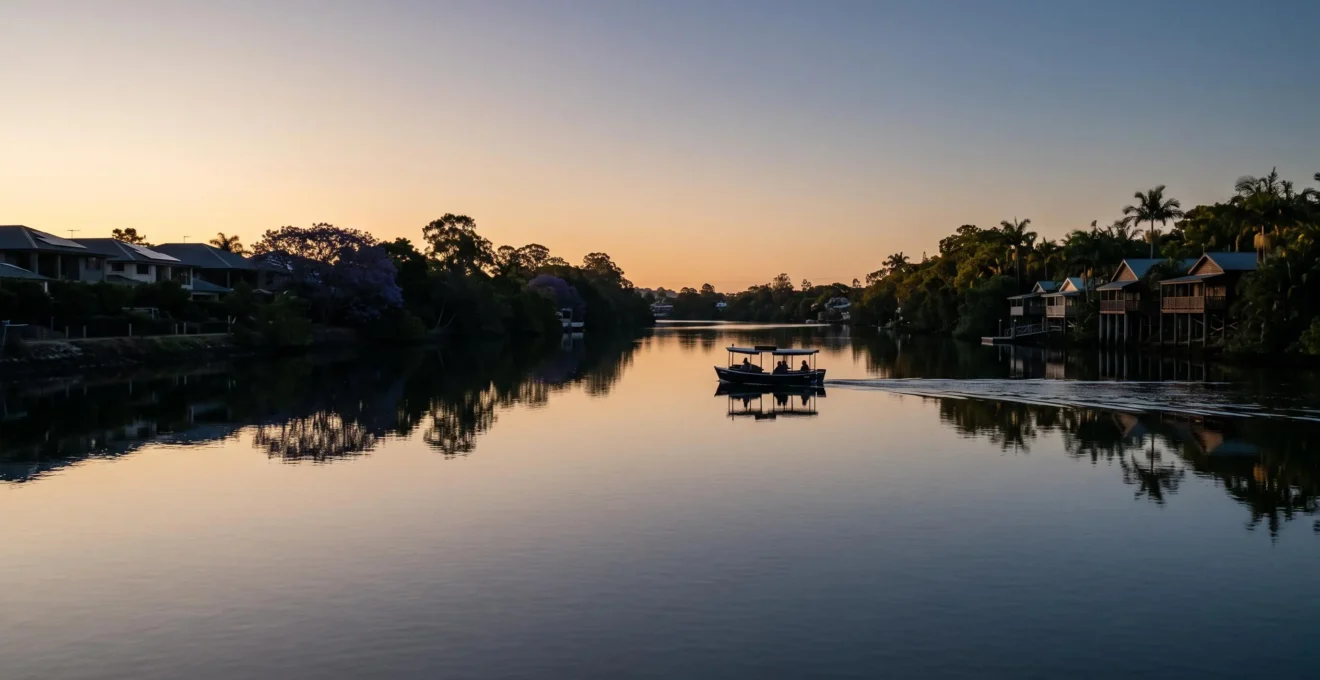
Experiencing Brisbane’s authentic outdoor lifestyle has little to do with the manufactured attractions of South Bank and everything to do with adopting the city’s unique, river-based daily rhythm.
- The Brisbane River is a dynamic transport system and recreational artery, not just a passive view.
- Genuine local life thrives in vibrant neighbourhood hubs like West End, which offer a stark contrast to tourist-oriented precincts.
Recommendation: Stop planning your itinerary by attraction; start planning it by activity windows, and use the free CityHopper ferry as your primary mode of transport to truly connect with the city’s flow.
For many visitors, the Brisbane experience begins and ends with a stroll through the South Bank Parklands. You see the purpose-built beach, the manicured gardens, and the Wheel of Brisbane, and you might feel you’ve captured the city’s essence. Yet, for active travellers drawn to the promise of a genuine subtropical lifestyle, this curated experience can feel hollow, disconnected from the real pulse of the city. You’ve seen the postcard, but you haven’t felt the heartbeat.
The common advice to « walk along the river » or « climb the Story Bridge » only scratches the surface. These are activities you *do* to the city, not experiences you share *with* it. The real secret to unlocking Brisbane’s outdoor culture lies in a fundamental mindset shift. What if the key wasn’t found in a list of destinations, but in understanding the city’s unique rhythm, a daily flow dictated by its serpentine river and its year-round climate? For locals, the city’s infrastructure isn’t just for getting from A to B; it’s an integrated part of their recreational and social lives.
This guide moves beyond the tourist map to reveal how to think and act like a Brisbane local. We will explore how to leverage the river as a transport network, identify the neighbourhoods that pulse with authentic community life, and develop a climate-smart strategy for year-round activity. It’s time to stop observing Brisbane from the sidelines and start participating in its dynamic outdoor lifestyle.
To help you navigate this local-first approach, this article breaks down the essential strategies for integrating into Brisbane’s outdoor culture. The following sections provide a complete roadmap, from mastering the river transport system to blending daily exercise with sightseeing seamlessly.
Contents: How to Experience Brisbane’s Authentic Outdoor Lifestyle
- Why Brisbane’s River Shapes Daily Life More Than Any Other Australian City’s Landmark
- How to Navigate Brisbane Using Free River Ferries Like a Daily Commuter
- Southbank or West End: Which Brisbane Neighborhood Delivers Real Local Life?
- The Brisbane Summer Mistake: Booking December and Facing 85% Humidity
- When to Visit Brisbane for Outdoor Activities and Perfect Subtropical Weather
- Why Brisbane Lets You Maintain Morning Exercise Routines Year-Round Unlike Southern Cities
- River Kayaking or Mountain Biking: Which Brisbane Outdoor Activity for City-Based Adventurers?
- How to Blend Brisbane Sightseeing with Daily Outdoor Activities Without Exhaustion
Why Brisbane’s River Shapes Daily Life More Than Any Other Australian City’s Landmark
In Sydney, the harbour is a spectacular backdrop; in Melbourne, the Yarra is a feature. But in Brisbane, the river is the city’s central artery. It’s not just a body of water to be viewed from a distance; it’s a living, working part of the urban fabric that dictates the rhythm of daily life. The ‘Brown Snake’, as it’s affectionately known, carves the city into distinct northern and southern territories, creating a psychological and physical divide that influences everything from real estate prices to social dynamics. For locals, life is lived on, across, and beside it.
This deep integration is what sets Brisbane apart. Commuters use the ferry network as a scenic alternative to congested roads. Cyclists and runners trace its meandering paths for their morning exercise. On weekends, its waters are dotted with kayaks, paddleboards, and private boats, turning the river itself into a massive public park. The city’s low-rise character means that, unlike in other capitals, the river remains a dominant and accessible feature rather than being overshadowed by skyscrapers.
Understanding this is the first step to experiencing the city like a local. To truly grasp Brisbane’s outdoor culture, you must see the river not as a landmark to visit, but as a dynamic system to be used. Its currents and connections are the key to unlocking a more authentic, active experience far from the contained world of the tourist precincts.
How to Navigate Brisbane Using Free River Ferries Like a Daily Commuter
The most effective way to reorient your perspective on Brisbane is to embrace its river transport. While the paid CityCat services are fast and efficient, the true local secret for leisurely exploration is the CityHopper. This free ferry service is your golden ticket to understanding the city’s riverside geography and rhythm without spending a cent. It’s not just transit; it’s an activity in itself. The entire network is extensive, as Brisbane City Council operates a fleet of 28 CityCats and 5 KittyCats across 22 terminals, showing how integral water travel is to the city’s design.
Using the CityHopper transforms your relationship with the city from that of a passive observer to an active participant. Instead of planning your day around taxi ranks or bus stops, you start thinking in terms of riverside access points and scenic cross-river hops. This small shift opens up a world of possibilities, allowing you to effortlessly move between key areas while enjoying unparalleled views of the city skyline, the Story Bridge, and the lush riverbanks.
Action Plan: The CityHopper Hop-On, Hop-Off Strategy
- Identify the Route: The service is entirely free and operates on a dedicated loop. Familiarise yourself with the six stops it covers between North Quay in the CBD and Sydney Street in New Farm.
- Plan Your Hops: Use the frequent departures, which run every 30 minutes from early morning until midnight, to disembark for coffee, sightseeing, a park visit, or a meal. There’s no fare, so there’s no penalty for short trips.
- Time Your Travel: The service uses smaller, 60-passenger KittyCat vessels. This offers a more intimate experience than the larger CityCats. Use the journey itself as downtime or a photo opportunity.
- Complete the Loop: Hop back on whenever you’re ready to continue your journey. A full loop provides a fantastic and free guided tour of the city’s most scenic inner-river stretch.
By mastering this simple system, you move beyond the static experience of South Bank and begin to engage with the city on its own terms, using the very infrastructure that defines its daily life. It is the first and most crucial step in living the Brisbane outdoor lifestyle.
Southbank or West End: Which Brisbane Neighborhood Delivers Real Local Life?
Once you’re navigating the river like a local, the next step is choosing where to hop off. The most common tourist stop is South Bank, a precinct of curated parklands, chain restaurants, and purpose-built attractions. While pleasant, it offers a sanitised version of Brisbane life. For a truly authentic experience, you need to cross the invisible line into a neighbourhood that locals genuinely inhabit. Just a short walk or ferry ride away lies West End, a vibrant, bohemian suburb that represents the city’s true heart and soul.
The contrast is most apparent on a Saturday morning. While tourists wander the manicured paths of South Bank, Brisbane residents flock to West End’s Davies Park Market. Here, under the shade of giant fig trees, the community comes alive. It’s a sprawling, energetic gathering of organic farmers, artisan bakers, street food vendors, and local craftspeople. This isn’t an event staged for visitors; it’s a weekly ritual, a cornerstone of local life where people shop, eat, and socialise.
The fundamental differences between these two adjacent areas highlight the choice every visitor has: to consume a pre-packaged experience or to participate in an authentic one. The following comparison, based on insights from a local guide to the West End Markets, makes the choice clear.
| Criteria | West End (Davies Park Market) | Southbank Parklands |
|---|---|---|
| Hours | Saturday, 6:00am–2:00pm | Open daily, no fixed market hours |
| Vendors | 150+ independent stallholders (produce, food, crafts) | Chain cafes and event-driven pop-up stalls |
| Atmosphere | Community-driven, live music, giant fig-tree canopy | Manicured, tourist and office-worker oriented |
| Setting | Local park along the river, residential surroundings | Purpose-built cultural and event precinct |
Choosing West End over South Bank isn’t just about visiting a different location; it’s about choosing to engage with Brisbane’s living culture. It’s where you’ll find the city’s creative spirit, its commitment to community, and a far more rewarding and memorable outdoor experience.
The Brisbane Summer Mistake: Booking December and Facing 85% Humidity
A common piece of advice for visitors to Brisbane is to avoid the summer months (December to February) due to the heat and humidity. While well-intentioned, this warning often leads travellers to miss out on a uniquely Brisbane experience. The mistake isn’t visiting in summer; it’s visiting without a local’s strategy for managing the climate. The humidity is no myth; climate data shows that December in Brisbane sees an average humidity of 69%, which can feel oppressive if you’re not prepared.
However, locals don’t hide indoors for three months. Instead, they adapt their rhythm to the subtropical weather pattern. The key is to understand that summer rain typically arrives in dramatic, short-lived afternoon thunderstorms, not all-day drizzles. This pattern creates a predictable daily schedule for outdoor activity. Mornings are often bright and clear, offering a perfect window for exercise or exploration before the heat peaks. The afternoon storm is not a disruption but a daily spectacle and a natural air-conditioner, cooling the city down for a pleasant, breezy evening.
Instead of fearing the summer storm, locals reframe it as a reward. By planning your main activities in the morning, you can treat the afternoon downpour as a welcome break—a time to retreat to a covered balcony, a riverside café, or a museum and watch the dramatic weather roll in. Once it passes, the city is refreshed and ready for an evening of outdoor dining or a relaxed stroll. To adopt this climate-smart approach, follow these simple steps:
- Expect the Pattern: Plan for afternoon or evening thunderstorms. Your main outdoor block should be scheduled before 2 PM.
- Reframe the Storm: See the rain as a cooling event. Find a covered lookout or verandah to enjoy the show rather than running from it.
- Embrace the Evening: Emerge after the storm passes to enjoy a cooler, more comfortable temperature for evening activities.
By working *with* the climate instead of against it, you can enjoy Brisbane’s vibrant summer atmosphere and turn a potential negative into a memorable part of your subtropical adventure.
When to Visit Brisbane for Outdoor Activities and Perfect Subtropical Weather
While summer in Brisbane is manageable with the right strategy, the city’s absolute prime time for outdoor activities falls within its shoulder seasons: autumn (March-May) and spring (September-November). During these periods, you get to experience the best of the subtropical climate—warm, sunny days without the intense humidity of summer or the cooler nights of winter. This is the sweet spot that locals cherish and savvy travellers should target.
The most significant advantage of these seasons is the dramatic drop in humidity. The air feels lighter and more comfortable for activities like walking, cycling, and kayaking. The data is clear: humidity swings dramatically, from a dry 43% in August to a sticky 59% in February on average, with the shoulder months providing a perfect middle ground. These periods are characterized by clear blue skies, minimal rainfall, and pleasant temperatures that are ideal for spending the entire day outdoors without feeling drained by the heat.
Spring, in particular, offers a spectacular visual treat as the city bursts into a riot of purple Jacaranda blossoms, transforming parks and streets into a vibrant canopy. To nail the timing for your visit, you need to read the seasonal window like a local:
- Target the Spring Window: Aim for September to November. You’ll be greeted by gently rising temperatures, low rainfall, and an explosion of floral color across the city.
- Utilize Longer Daylight: This period offers increasing daylight hours, extending the usable time for outdoor adventures each day.
- Avoid the Extremes: The moderate temperatures of the shoulder seasons allow you to sidestep both the occasional winter chill and the peak summer humidity, making it the most versatile time to visit.
- Consider Late Autumn: The period of late April to May offers similar conditions to spring, combining comfortable temperatures with the bonus of thinner crowds as the peak tourist season winds down.
Booking your trip during these windows ensures you’ll experience Brisbane at its best, with perfect weather conditions for fully immersing yourself in its celebrated outdoor lifestyle.
Why Brisbane Lets You Maintain Morning Exercise Routines Year-Round Unlike Southern Cities
For active travellers, one of the greatest challenges of being on the road is maintaining a consistent exercise routine. Hotel gyms are often uninspiring, and unfamiliar cities can be intimidating to navigate. This is where Brisbane’s design and climate offer a distinct advantage over southern capitals like Sydney and Melbourne. Thanks to its mild winters and predictable summer mornings, an early outdoor workout is not just possible but a deeply ingrained part of the local culture, 365 days a year.
In winter, you won’t face the biting cold or frost that can make an early start in Melbourne a chore. In summer, the pre-dawn and early morning hours offer a cool, low-humidity window perfect for a run or ride before the heat sets in. This reliable « activity window » is something locals depend on. The city itself is designed to support this lifestyle. Rather than being an afterthought, recreational infrastructure is woven directly into the urban landscape. A prime example is that the city’s outdoor gym network spans more than 170 local parks, offering free and accessible equipment to everyone.
This means you don’t need a gym membership to stay fit. You can join the locals on the iconic Kangaroo Point Stairs for a challenging cardio session, cycle the dedicated bikeways that hug the river, or use the free equipment in parks like New Farm or the City Botanic Gardens. By simply stepping outside in the morning, you can seamlessly blend your fitness routine with sightseeing, experiencing the city as it wakes up. This accessibility and year-round comfort make it effortless to maintain your active lifestyle while travelling.
River Kayaking or Mountain Biking: Which Brisbane Outdoor Activity for City-Based Adventurers?
Once you’ve embraced Brisbane’s outdoor rhythm, the next question is how to channel your energy. For the city-based adventurer, two standout options offer completely different perspectives of the region: river kayaking and mountain biking. Your choice depends on whether you want to immerse yourself in the urban-river ecosystem or escape to the rugged bushland that surrounds the city.
River kayaking offers the ultimate « local » experience, placing you directly on the city’s main artery. Paddling on the Brisbane River gives you a unique, water-level view of the city skyline, the underside of its iconic bridges, and the lush mangrove forests that line its banks. It’s a surprisingly peaceful way to engage with the bustling city. You can join a guided tour or rent a kayak from operators at Kangaroo Point or West End and explore at your own pace. It’s a fantastic way to combine a full-body workout with sightseeing, experiencing the city’s landmarks from an entirely new angle.
On the other hand, mountain biking provides an escape into the green heart of Brisbane. Just a short drive from the CBD, you’ll find world-class trails at Mount Coot-tha and Daisy Hill. These networks cater to all skill levels, from gentle, winding paths through eucalyptus forests to technical single-track descents. Here, the soundtrack of the city is replaced by the calls of kookaburras and the crunch of tires on dirt. It’s an opportunity to experience Queensland’s unique bushland and potentially spot wildlife like wallabies and koalas. This option is about trading the urban landscape for natural immersion.
Ultimately, the choice is yours. Do you want to paddle through the heart of the city, feeling its pulse from the water? Or do you want to challenge yourself on the trails that ring the city, connecting with its wilder side? Both offer a rewarding and authentic Brisbane adventure.
Key takeaways
- Treat the Brisbane River as a transport system, not just a scenic backdrop, by using the free CityHopper.
- Swap tourist-heavy South Bank for the authentic community feel of West End’s markets and cafes.
- Plan outdoor activities for mornings or late afternoons, especially in summer, and embrace the daily storm as a natural cool-down.
How to Blend Brisbane Sightseeing with Daily Outdoor Activities Without Exhaustion
One of the biggest pitfalls for active travellers is the « activity silo » effect: sightseeing is in one box, and exercise is in another. This often leads to long transit times and a feeling of exhaustion from trying to do too much. The key to a sustainable and enjoyable Brisbane experience is to merge these activities through a technique locals use instinctively: activity stacking. This means making the journey between sights part of the activity itself.
Brisbane’s riverside design is perfectly suited for this approach. An extensive network of pedestrian bridges and dedicated pathways connects the city’s main cultural and recreational hubs. Instead of taking a taxi from a museum to a park, you can walk or cycle, turning a 10-minute transfer into a 30-minute scenic workout. This dissolves the line between transit and recreation, allowing you to cover more ground and experience more of the city’s atmosphere without feeling rushed or fatigued.
A perfect example of activity stacking is the route connecting the CBD to the South Bank cultural precinct. This loop integrates green spaces, architectural landmarks, and cultural institutions into one seamless, active journey.
- Start in the CBD: Begin at a riverfront green space like Queens Wharf Plaza or the City Botanic Gardens, connecting with the Mangrove Walk and Waterline Park.
- Cross the River Actively: Use the Neville Bonner Bridge, a modern pedestrian bridge linking Queen’s Wharf directly to the heart of the South Bank arts precinct. This walk offers stunning views and serves as your active ‘commute’.
- Combine Culture and Movement: Your bridge crossing delivers you to the doorstep of the Queensland Art Gallery, GOMA, or the Queensland Museum. Pair a visit with your walk, rather than treating them as separate events.
- Complete the Loop: Finish your journey with a relaxed stroll through the South Bank Parklands and back across another bridge, letting the entire walk count as your primary exercise for the day.
By adopting this mindset, you transform your entire trip. Every day becomes a fluid blend of discovery and activity, allowing you to see the sights, stay active, and connect with the city’s outdoor culture in a way that feels natural, not forced.
Start planning your Brisbane visit today, not as a checklist of places to see, but as a schedule of experiences to live. Your first step: map your day around the river, and let its current guide your adventure.
Frequently Asked Questions About Brisbane’s Outdoor Lifestyle
What is the simplest way to avoid burnout when combining sightseeing and outdoor activity in Brisbane?
Group activities geographically rather than by category — pair a museum or gallery visit with an adjacent park or riverside walk so travel time doubles as downtime.
Is it better to plan one neighborhood per day or hop between several?
Dedicating a full day to one walkable precinct reduces transit fatigue and allows a more natural rhythm of activity, food and rest.
Can the commute itself become part of the experience?
Yes — riverside paths and pedestrian bridges connecting cultural precincts, like the Neville Bonner Bridge linking Queen’s Wharf to South Bank, are scenic enough to function as the activity, not just the transfer between them.