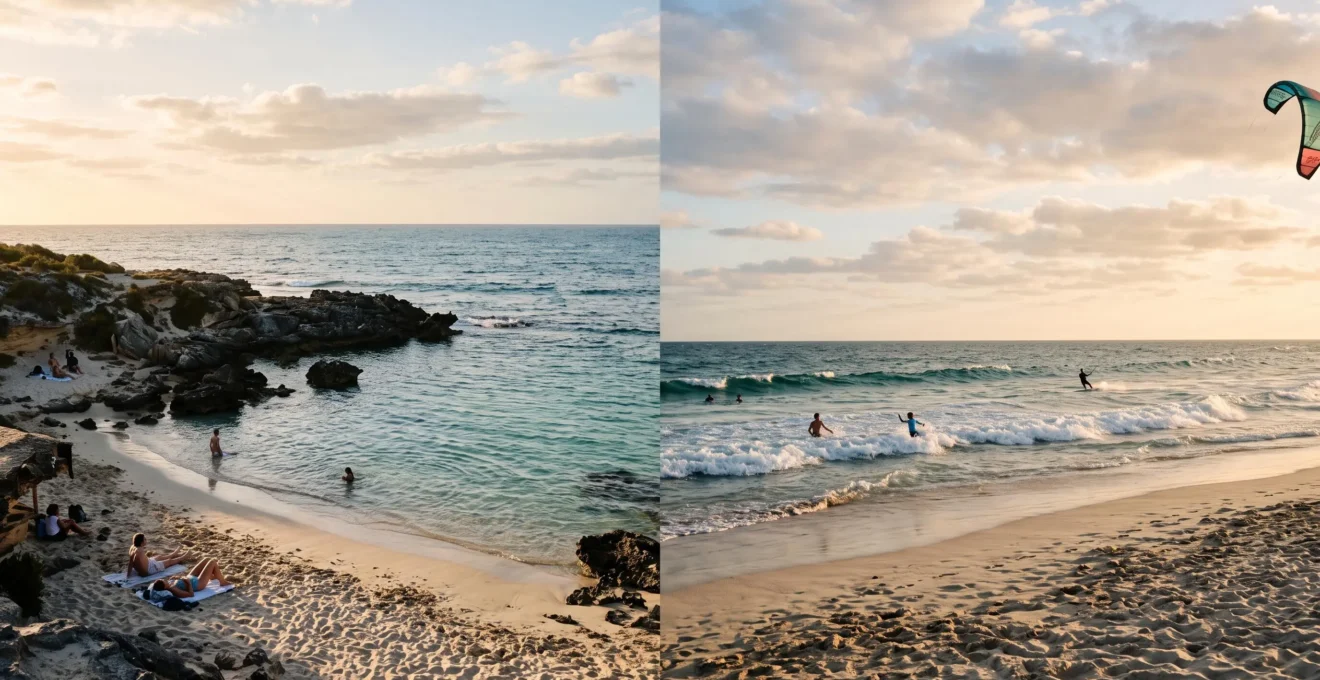
The key to the perfect Perth beach day is not finding the ‘best’ beach, but synchronising your plans with the coastline’s unique daily rhythm.
- Morning hours (before 11 am) offer calm, clear waters ideal for swimming and paddling across the entire coast.
- Afternoon winds, known as the ‘Fremantle Doctor’, transform the coast, favouring wind sports and creating different atmospheric conditions from north to south.
Recommendation: First, decide between the sheltered northern coves or the expansive southern beaches, then pick a time of day that matches your desired activity.
Perth’s coastline is a seemingly endless ribbon of white sand and turquoise water, presenting visitors with a paradox of choice. With dozens of pristine options, how do you decide where to lay your towel? Most guides offer simple lists, but they miss the most crucial element: each stretch of this coast has a distinct personality, a rhythm that shifts dramatically throughout the day. Choosing the right beach isn’t about location; it’s about timing and matching the atmosphere to your mood.
The common approach is to pick the most famous name or the closest spot on the map. This often leads to disappointment—arriving at a windswept shore hoping for a calm swim, or seeking solitude on a beach buzzing with energy. The secret, which Perth locals instinctively understand, lies in reading the environmental cues. The fundamental difference between the northern and southern suburbs, the predictable arrival of the afternoon sea breeze, and the arc of the sun across the Indian Ocean are the true guides.
This guide abandons the generic « top ten » format. Instead, it provides a decision-making framework. We will decode the coastline’s personality, moving from the macro (north vs. south) to the micro (Cottesloe vs. Scarborough) and the critical factor of timing. By understanding how to synchronise your plans with the natural schedule of the coast, you can move beyond simply visiting a beach and start curating your perfect coastal day, every time.
To help you navigate these choices, this guide breaks down the essential factors for matching a beach to your ideal day. We will explore the coastline’s geographical quirks, safety essentials, timing strategies, and the unique qualities that set Perth’s beaches apart from any other in the world.
Summary: The Ultimate Guide to Choosing Your Ideal Perth Beach
- Why Perth’s Northern Beaches Feel Completely Different from the Southern Coastline
- How to Read Perth Beach Flags and Conditions for Safe Swimming as a Visitor
- Cottesloe or Scarborough: Which Perth Beach Delivers Your Perfect Coastal Day?
- The Perth Beach Timing Mistake That Leaves You Without Parking or Shade
- When to Visit Perth Beaches for Calm Swimming and When to Expect Rough Surf
- Why Perth’s Beaches Offer the Space and Clarity Sydney’s Coastline Lost Decades Ago
- When to Schedule Water Sports During Your Day for Best Conditions and Performance
- Why Perth’s Isolation Rewards Travellers with Beaches and Sunsets Sydney Cannot Match
Why Perth’s Northern Beaches Feel Completely Different from the Southern Coastline
Your first decision when choosing a Perth beach should be whether to head north or south of the Swan River. This isn’t just a matter of geography; it defines the very structure and feel of the coastline. The northern beaches are characterized by limestone reef systems and sheltered coves, creating smaller, more intimate settings like Mettams Pool or Burns Beach. These natural barriers offer protection from wind and swell, making them ideal for snorkeling and relaxed family swimming, especially in the mornings.
In contrast, the southern coastline is defined by long, uninterrupted stretches of open sand, such as Coogee, Leighton, and Port Beach. These wide expanses are more exposed to the elements, particularly the prevailing afternoon winds. This exposure is exactly what makes them a haven for kitesurfers and windsurfers. The defining factor in this difference is the afternoon sea breeze, known locally as the Fremantle Doctor. This consistent wind, which can reach speeds of 28-37 km/h near the shore, has a much greater impact on the open southern beaches than on the sheltered northern coves.
Understanding this fundamental duality is the key to matching the coast to your activity. If your goal is to explore underwater life in calm, clear water, the northern reefs are your destination. If you want to feel the energy of the wind, take a long, uninterrupted walk, or watch skilled wind sport athletes, the southern beaches will deliver.
This table breaks down the core differences to help guide your initial decision, setting the stage for a successful day on the coast.
| Criteria | Northern Beaches | Southern Beaches |
|---|---|---|
| Coastline structure | Sheltered limestone coves and reef pools | Long open sandy stretches |
| Wind exposure | More shelter from the afternoon sea breeze | More exposed, favouring kite and windsurfing |
| Typical activity | Snorkeling, calm family swimming | Long walks, wind sports, surf culture |
| Best for | Quiet coves and marine life spotting | Uninterrupted beach walks and stronger winds |
Ultimately, neither region is « better »—they simply offer two fundamentally different coastal experiences. Choosing correctly from the start ensures the environment will support, not sabotage, your plans for the day.
How to Read Perth Beach Flags and Conditions for Safe Swimming as a Visitor
Once you’ve chosen a beach, your immediate priority upon arrival is safety. Perth’s beautiful waters can hide powerful hazards, primarily rip currents. A rip is a strong, narrow channel of water that flows quickly away from the shore, and it can be difficult for inexperienced swimmers to spot. Nationally, 48% of coastal drowning deaths are linked to rip currents, highlighting the critical importance of understanding and respecting ocean conditions.
The most important safety rule is simple: always swim at a patrolled beach between the red and yellow flags. These flags are placed by trained surf lifesavers to mark the safest area for swimming. Swimming outside these flags, or at an unpatrolled beach, significantly increases your risk. If a beach is closed (indicated by a solid red flag), do not enter the water under any circumstances, even if it looks calm. The lifesavers have identified a hazard that may not be visible to the untrained eye.
Beyond flags, learn to look for signs of a rip current yourself. Telltale signs include a gap in the breaking waves, a channel of churning or choppy water, or a line of foam, seaweed, or debris moving steadily out to sea. If you are ever caught in a rip, the most important thing to remember is do not panic and do not try to swim directly against it. Stay calm, float to conserve energy, and raise an arm to signal for help. If you are a capable swimmer, swim parallel to the shore until you are out of the current, then make your way back to the beach.
Your Essential Pre-Swim Safety Check Using the SharkSmart WA App
- Download the free SharkSmart WA app before heading to the coast to get the latest information.
- Check near real-time shark activity alerts and warnings for your chosen beach location.
- Review patrolled Surf Life Saving WA beach locations and check weather forecasts within the app.
- Save your favourite coastal locations to receive personalised notifications about recent activity.
- Familiarise yourself with the app’s Beach Emergency Number (BEN) feature to quickly report an incident if needed.
Using official resources and developing your own ability to read the water are complementary skills that ensure your beautiful day at a Perth beach remains a safe and positive experience.
Cottesloe or Scarborough: Which Perth Beach Delivers Your Perfect Coastal Day?
The choice between Cottesloe and Scarborough is a classic Perth dilemma, as these two iconic beaches represent opposite ends of the coastal personality spectrum. Your preference between them reveals what you truly seek in a beach day: serene relaxation or vibrant energy. They are a perfect case study in how two beaches, just a few kilometres apart, can offer completely different atmospheres.
Cottesloe is Perth’s elegant, relaxed grand dame. Its iconic Indiana Teahouse, tiered grassy banks, and protective groyne create a sheltered, family-friendly amphitheatre. Mornings here are for quiet lap swimmers in crystal-clear water, while afternoons are defined by families and groups enjoying picnics under the shade of the massive Norfolk pines. The evening atmosphere is one of serene sophistication, with people gathering on the grass to watch the sunset with a bottle of wine. It is a place for calm conversation and quiet appreciation of the scenery.
Scarborough, on the other hand, is the energetic, youthful heart of the coast. Re-developed into a world-class foreshore, it’s a hub of constant activity. Mornings belong to the dedicated surfers chasing the best swell. By midday, the beach is a hive of activity with DJ music, beach volleyball, and a high-energy crowd. The impressive Scarborough Beach Pool offers an alternative to the ocean, and the skate park and climbing wall add to the dynamic vibe. Evenings are vibrant and loud, with the beachfront bars and the Sunset Hill amphitheatre drawing a lively crowd ready for a social night out.
The following table illustrates how the experience at each beach evolves throughout the day, helping you synchronise your visit with the vibe you’re looking for.
| Time of Day | Cottesloe | Scarborough |
|---|---|---|
| Morning | Quiet lap swimmers and calm, crystal-clear water | Hardcore surfers chasing the morning swell |
| Midday | Family picnic rush under Norfolk pines | DJ music, volleyball and high-energy crowds |
| Evening | Serene sunset drinks and grass picnics | Vibrant beachfront bar and amphitheatre scene |
| Best avoided by | Visitors seeking nightlife and high energy | Visitors wanting a quiet spot to read |
Ultimately, choosing between them is a matter of self-awareness. Are you looking for a tranquil backdrop to relax and connect, or an energising environment to socialise and play? Your answer will point you clearly to one or the other.
The Perth Beach Timing Mistake That Leaves You Without Parking or Shade
The single biggest mistake visitors make when heading to a Perth beach is a simple one: arriving too late. On a warm, sunny day, particularly on a weekend, arriving after 10:30 am often means a frustrating search for parking and settling for a spot on the sand with zero shade. This isn’t just about beating the crowds; it’s about working with the unique environmental clock of the Perth coastline.
Perth locals know that the morning is golden. Early mornings are typically blessed with an offshore, easterly wind, which has the effect of flattening the ocean surface, creating glassy, calm conditions perfect for swimming. This is the « calm before the storm » of the sea breeze. Furthermore, the sun is in the east, meaning any cliffs, dunes, or buildings on the foreshore will cast long, welcome shadows across the sand. Arriving early (ideally before 9 am) secures you a prime position in this morning shade and a convenient parking spot.
Around midday, three things happen simultaneously. First, the crowds peak. Second, the sun moves directly overhead, eliminating almost all natural shade and bringing the most intense period of UV radiation. Third, the famous Fremantle Doctor sea breeze begins to stir, changing the entire dynamic of the coast. Those who arrive at this time face a trifecta of challenges: no parking, no shade, and potentially windy conditions they weren’t expecting.
Therefore, a successful beach strategy involves a « split day » approach. Either commit to an early morning visit, enjoying the best swimming conditions and natural shade before leaving as the crowds and wind arrive. Or, plan for a late afternoon and evening visit (after 3:30 pm), when the early crowds have thinned, the wind is part of the expected atmosphere, and you are there primarily for the sunset. The midday rush is the period best avoided by those seeking a relaxed experience.
By treating your beach visit not as a single event but as a specific time slot, you can ensure your experience is one of relaxation and enjoyment, not one of circling car parks in the blazing sun.
When to Visit Perth Beaches for Calm Swimming and When to Expect Rough Surf
The key to finding your ideal water conditions on the Perth coast is understanding one dominant force of nature: the Fremantle Doctor. This reliable south-westerly sea breeze is the engine that dictates whether the ocean will be a calm swimming pool or a choppy, wind-whipped playground. As a rule, the best time for calm swimming at almost any Perth beach is early in the morning, typically before 11 am.
During these morning hours, the overnight land breeze (usually an easterly) holds back the ocean swell, resulting in glassy, tranquil conditions. This is the premium window for activities like stand-up paddleboarding, kayaking, and relaxed swimming. However, this calm is temporary. The sea breeze consistently blows in from the southwest, starting between 10am and 3pm, and it fundamentally changes the water’s surface. It creates wind chop, making swimming less pleasant and long-distance efforts more challenging. This afternoon wind, however, is precisely what kitesurfers and windsurfers wait for all day.
The strength and timing of the ‘Freo Doctor’ also vary with the seasons, which can help you fine-tune your visit for the best possible conditions. This seasonal pattern is driven by the temperature difference between the hot land and the cooler Indian Ocean.
This table provides a seasonal overview of what to expect from the wind, allowing you to plan your trip during the ‘Goldilocks’ season or simply know what to anticipate day-to-day.
| Season | Wind Behaviour | Swimming Conditions |
|---|---|---|
| December-January | Strongest Doctor, greatest land-sea temperature gap | Predictable calm mornings, windy afternoons |
| February-March | Weaker breeze as ocean warms | Milder afternoons, the ‘Goldilocks’ season |
| October-November | Moderate breeze returns as sea cools land | Variable, generally pleasant |
| Winter months | Weak or non-existent Doctor | Storm swells for experienced surfers only |
This knowledge transforms you from a passive visitor into an active planner, ensuring the ocean conditions always match your expectations and activity choice.
Why Perth’s Beaches Offer the Space and Clarity Sydney’s Coastline Lost Decades Ago
For travellers familiar with Australia’s east coast, the first visit to a Perth beach can be a revelation. The overwhelming feeling is one of space and clarity. While beaches like Sydney’s Bondi are world-famous, they often come with a sense of congestion that Perth’s coastline has gracefully avoided. This isn’t just a feeling; it’s a matter of population density and geographic scale.
The numbers tell a compelling story. On a typical day, Bondi Beach sees about 7,000 to 8,000 visitors per day on average, a figure that can swell to over 40,000 on a peak summer day. This intense human presence is concentrated on a relatively small crescent of sand. In contrast, Perth’s smaller population is spread across a much longer, more accessible stretch of coastline. Even on a busy public holiday, it’s almost always possible to find a generous patch of sand to yourself by simply walking a few hundred metres away from the main access point.
This sense of space extends to the water itself. The Indian Ocean’s brilliant turquoise clarity is a defining feature of the west coast. While water quality can vary, Perth’s beaches are renowned for their clear, unpolluted waters, making for exceptional swimming and snorkeling experiences. This clarity, combined with the white sand, creates a visually stunning environment that feels both wild and pristine.
This abundance of space has a profound psychological effect. It allows for a more personal and contemplative connection with the ocean. You can hear the waves without the constant hum of conversation, watch the sunset without a thousand heads in front of you, and find a sense of solitude that is increasingly rare on the world’s popular coastlines. It’s a quality that Perth’s relative isolation has preserved, offering a more elemental and less commercialised beach experience.
For those who value breathing room and a direct connection to the natural environment, Perth’s beaches deliver a form of coastal luxury that has become a true rarity.
When to Schedule Water Sports During Your Day for Best Conditions and Performance
For water sports enthusiasts, timing is everything on the Perth coast. The daily transition from calm morning to windy afternoon creates two distinct and highly predictable windows for different activities. Aligning your sport with the right window doesn’t just improve your experience—it’s often the difference between a great session and a frustrating struggle against the elements.
The ‘Morning Calm’ window (from sunrise to around 10 or 11 am) is the domain of paddle-powered and visibility-dependent sports. The glassy water is perfect for stand-up paddleboarding (SUP), kayaking, and open-water swimming. The lack of wind chop allows for smooth gliding and efficient strokes. This is also the best time for snorkeling, as the calm surface and high morning sun angle provide optimal underwater visibility on the northern reefs. Boat traffic is also lighter in the early hours, adding to the safety and serenity.
Conversely, the ‘Afternoon Wind’ window (from early afternoon onwards) belongs to the wind-powered sports. As the Fremantle Doctor builds, kitesurfers and windsurfers flock to the more exposed southern beaches like Leighton, Woodman Point, and Safety Bay. The consistent strength and direction of this south-westerly breeze create world-class conditions for these sports. Attempting to SUP or kayak in these conditions is difficult and often unpleasant, as you’ll be fighting a constant battle against the wind and chop.
To maximize your performance and enjoyment, consult this simple timetable. It’s the key to working with the ocean’s natural rhythm, not against it, as confirmed by local surf and wind forecasts.
| Activity | Ideal Time | The Why |
|---|---|---|
| SUP, kayaking, snorkeling | Early morning | Water is calm before the sea breeze arrives |
| Open-water swimming | Before 10am | Avoids both wind chop and boat traffic |
| Kitesurfing, windsurfing | Early afternoon onward | The Fremantle Doctor delivers a consistent southwesterly breeze |
By respecting this natural daily schedule, you guarantee that you’ll always have the best possible conditions for your chosen activity, leading to better performance and a far more enjoyable day on the water.
Key Takeaways
- Your first choice is always North (for sheltered coves and snorkeling) vs. South (for long walks and wind sports).
- The day is split in two: calm mornings are for swimming and paddling, while windy afternoons are for wind sports and atmosphere.
- Match the beach’s personality to your mood: choose Cottesloe for serene relaxation and Scarborough for vibrant energy.
Why Perth’s Isolation Rewards Travellers with Beaches and Sunsets Sydney Cannot Match
Perth’s title as one of the world’s most isolated capital cities is often seen as a drawback. But for the coastal traveller, this isolation is its greatest asset. It has preserved a raw, expansive beachfront experience and gifted the city with a daily spectacle that no east-coast city can replicate: the unobstructed sunset over the Indian Ocean.
While Sydney’s famous beaches face east, greeting the sunrise, Perth’s entire coastline faces west. This simple geographic fact means that every single evening, the sky and sea are set ablaze with colour. It is not just an event; it’s a communal ritual. As the afternoon winds soften, people gather on the grassy banks of Cottesloe, the dunes of City Beach, or the waterfront bars of Scarborough to watch the sun dip below the horizon. This shared moment of appreciation is a core part of Perth’s cultural identity.
The quality of this experience is enhanced by the sense of space discussed earlier. Unlike watching a sunset over a cityscape or a crowded harbour, the view from a Perth beach is one of infinite-seeming ocean. The unbroken horizon creates a vast canvas for the light to play upon, reflecting brilliant oranges, pinks, and purples on the water’s surface and the wet sand. It is a powerful, elemental display that fosters a profound sense of peace and perspective.
This daily reward is the ultimate payoff for understanding the rhythms of the coast. After a day spent swimming in the calm morning waters or harnessing the afternoon winds, the sunset provides a perfect, tranquil conclusion. It is a gift of geography, a direct benefit of Perth’s position on the edge of the continent, and a powerful reminder that sometimes, the greatest rewards are found in the most isolated places.
Now that you have this framework, your next step is to get out and explore. Use these principles to choose a beach, time your visit, and experience for yourself the unique personality and rhythm of Perth’s magnificent coastline.