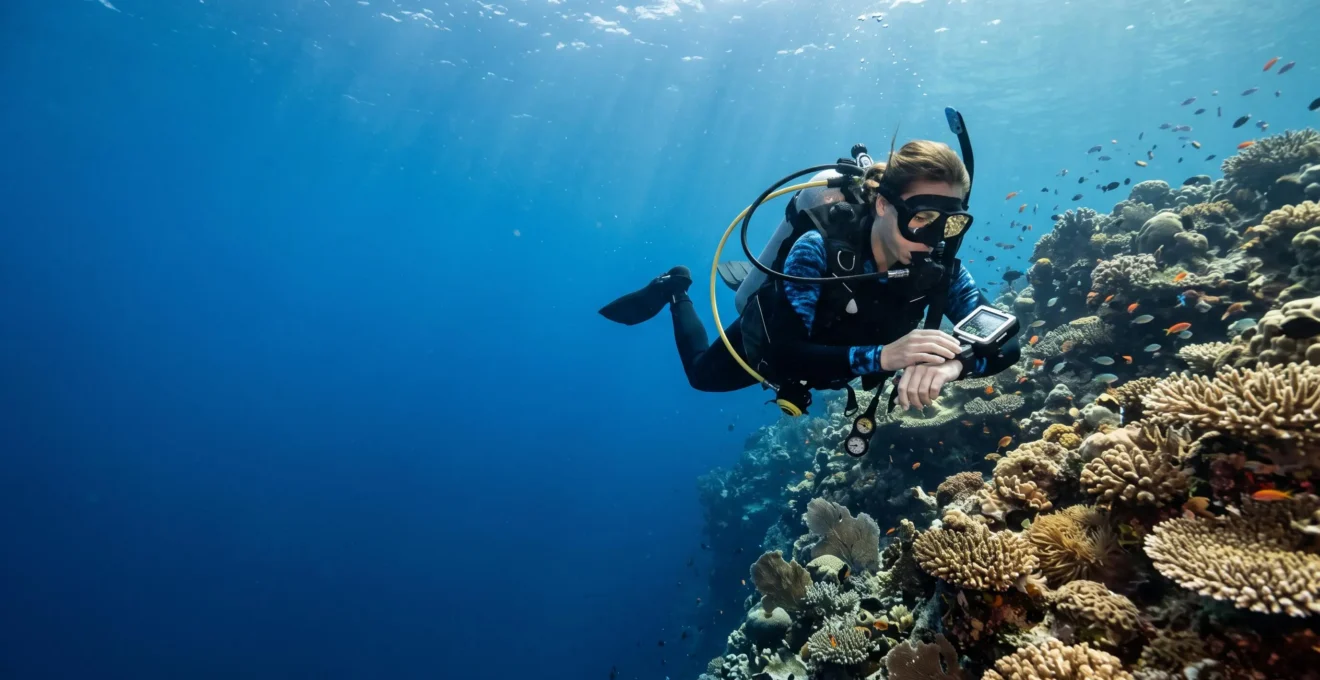
Choosing the right Australian dive site goes far beyond simply matching your certification card to a location’s name.
- The true measure of a site’s suitability is its unique « Challenge DNA »—a combination of depth, current, visibility, and logistical access.
- Factors like insurance gaps in remote waters and the choice between liveaboard expeditions versus shore-based trips are as critical as your certified depth limit.
Recommendation: Shift your focus from « Can I dive here? » to « What skills will this dive demand? » to build a progressive and genuinely rewarding Australian dive itinerary.
The dream of diving in Australia often conjures images of vibrant coral gardens and majestic marine life. For certified divers, the question isn’t whether to go, but where. With a coastline stretching nearly 34,000 kilometers, the options are as vast as the ocean itself. The conventional wisdom is straightforward: check your certification level, read some reviews, and book a trip. This approach treats your certification card as a simple entry ticket, a binary yes/no for a given site.
But this simplistic view often misses the crucial nuances that separate a good dive from an unforgettable one—or worse, a comfortable dive from a dangerously challenging one. The true key to unlocking Australia’s underwater wonders isn’t just about the level printed on your card (be it PADI, SSI, or another). It’s about developing the expertise to analyze a site’s unique « Challenge DNA. » But what if the most critical factors weren’t just depth and visibility, but logistics, seasonality, and the specific skills a site demands beyond basic certification requirements?
This guide provides a specialist’s framework for assessing Australian dive sites. We will move beyond the basics of certification matching to explore the logistical overhead of different reef systems, the hidden risks of diving in remote waters, and how to sequence your dives to build a genuine skill progression. By learning to think like a difficulty assessment specialist, you can ensure every dive you undertake is not just safe, but perfectly aligned with your abilities and ambitions.
To navigate this vast underwater landscape, it’s essential to understand how to deconstruct the options available. The following sections provide a structured approach to assessing everything from certification recognition to the subtle differences between Australia’s premier reef systems, helping you build your ultimate dive itinerary.
Summary: How to Choose Australian Dive Sites That Match Your Certification and Skill Level
- Why Australia Delivers World-Class Diving for Every Level from Beginner to Technical Diver
- How to Ensure Your Overseas Dive Certification Is Recognized by Australian Operators
- Great Barrier Reef or Ningaloo Reef: Which Delivers Better Diving for Advanced Divers?
- The Dive Insurance Gap That Leaves You Uncovered in Remote Australian Waters
- When to Dive Australia for Coral Spawning, Whale Sharks, and Seasonal Marine Events
- Why the Coral Sea Delivers Marine Biodiversity the Caribbean Cannot Match
- How to Sequence Water Sports for Skill Transfer and Injury Prevention
- How to Experience the Coral Sea’s Marine Life Without Damaging the Reef
Why Australia Delivers World-Class Diving for Every Level from Beginner to Technical Diver
Australia’s reputation as a premier dive destination is built on a foundation of incredible diversity. It’s one of the few places on Earth where a diver can explore cool-water kelp forests in the south and transition to the world’s largest tropical reef system in the north. This environmental variety creates a natural « Skill Progression Pathway » that can cater to a brand-new Open Water diver as well as a seasoned technical explorer. The industry’s maturity is reflected in its economic footprint; Australia’s diving tourism revenue reached USD 227.3 million in 2023 and is projected to more than double by 2030, signaling a robust infrastructure of operators, vessels, and safety standards.
This infrastructure allows for a structured approach to building experience. A diver can methodically advance their skills by following a geographic and logistical progression. For example, a typical journey might involve these steps:
- Step 1: Begin on the East Coast, where Cairns and Port Douglas offer accessible ribbon reefs, walls, and day-trip liveaboards suited to all levels.
- Step 2: Add wreck experience at the SS Yongala near Townsville, a world-renowned site that requires advanced certification due to its depth and potential currents.
- Step 3: Progress to Western Australia’s Ningaloo Reef and Exmouth for accessible, shore-based encounters with megafauna like whale sharks and manta rays.
- Step 4: Graduate to multi-day liveaboards to reach the most pristine outer Great Barrier Reef and Coral Sea sites, which demand comfort with longer days on the water and more challenging conditions.
This progression isn’t just about logging dives; it’s about mastering different types of challenges. A diver learns to handle the logistics of a liveaboard, navigate wall dives, manage drift dives, and finally, take on the « logistical overhead » of expeditions to remote locations. It’s this ability to offer a complete diver’s journey, from the first open-water breaths to the frontiers of technical exploration, that makes Australia’s offering truly world-class.
How to Ensure Your Overseas Dive Certification Is Recognized by Australian Operators
A common concern for international divers is whether their certification, issued by an agency outside of Australia, will be accepted. The good news is that the global dive industry is highly standardized. Most Australian dive operators recognize certifications from any agency that is a member of the World Recreational Scuba Training Council (WRSTC). This includes major players like PADI, SSI, NAUI, BSAC, and CMAS. This cross-recognition ensures that your Open Water, Advanced, or Rescue Diver certification will be understood and accepted as equivalent.
However, the certification card is only the starting point. A professional dive operator’s primary concern is safety and your demonstrated competence in the water. As the Divezone Editorial Team notes about Australian sites:
Most of the dives sites are easy and suitable for Padi Open Water divers but exploring the more remote areas on liveaboard is more suitable for experienced divers.
– Divezone Editorial Team, Divezone – Best Diving Sites in Australia
This distinction is crucial. While your card gets you on the boat, your logbook and recent experience are what truly qualify you for more challenging dives. An operator assessing a diver for a deep wreck or a strong current will look for logged dives in similar conditions, not just a plastic card issued years ago. Be prepared to show a detailed logbook, especially if you’re aiming for sites that push the limits of recreational diving. An Advanced Open Water diver with 20 logged dives in the last six months is often seen as a better candidate than a Divemaster with 200 dives who hasn’t been in the water for three years.
Great Barrier Reef or Ningaloo Reef: Which Delivers Better Diving for Advanced Divers?
For advanced divers, the choice between Australia’s two iconic reef systems—the Great Barrier Reef (GBR) on the east coast and Ningaloo Reef on the west—is not about which is « better, » but which « Challenge DNA » aligns with their goals. The GBR is an expedition, often requiring multi-day liveaboards to access the pristine outer reefs and famous sites like the Cod Hole or the SS Yongala wreck. This involves significant logistical overhead but rewards divers with unparalleled coral wall structures and biodiversity. Ningaloo, by contrast, is a masterclass in accessibility. As the world’s largest fringing reef, its treasures are often just a short boat ride from shore, making it ideal for day trips focused on specific megafauna encounters.
The differences in their operational models and signature experiences are a key factor for advanced divers planning a trip, as this comparative analysis shows:
| Criteria | Great Barrier Reef | Ningaloo Reef |
|---|---|---|
| Primary Access | Liveaboard-centric for outer reefs; day boats from Cairns/Port Douglas | Shore-based day trips from Exmouth and Coral Bay |
| Signature Experience | Ribbon Reef walls, Cod Hole giant potato cod, SS Yongala wreck | Whale shark and manta ray swims, fringing reef snorkeling |
| Peak Season | May–October for clearest conditions | March–July for whale shark season |
| Best Suited For | All levels, with liveaboards unlocking advanced sites | Snorkelers and divers seeking accessible megafauna encounters |
For the advanced diver seeking guaranteed big-animal encounters with minimal fuss, Ningaloo is almost unbeatable. Its reputation for whale shark encounters is backed by data; recent tour data indicates a staggering 97.14% whale shark interaction rate per tour during peak season. The GBR, while also home to megafauna, offers a different challenge: the exploration of vast, complex reef structures and deep walls that demand excellent buoyancy and navigation skills. The decision ultimately comes down to a preference in diving style: the accessible, targeted megafauna experience of Ningaloo versus the immersive, expedition-style challenge of the outer GBR.
The Dive Insurance Gap That Leaves You Uncovered in Remote Australian Waters
While assessing dive sites for skill-appropriateness, it’s easy to overlook a critical component of your « Risk Mitigation Framework »: insurance. Many divers assume their standard travel insurance will cover them in an accident, but this is a dangerous and often costly misconception. Most travel policies contain exclusions for « hazardous activities, » which almost always includes scuba diving, or they impose shallow depth limits (e.g., 10 meters) that are inadequate for certified divers. This creates a significant coverage gap, particularly when diving in remote Australian locations where access to medical care is complex and expensive.
The primary risk in a serious dive accident is decompression sickness (DCS), which requires treatment in a hyperbaric chamber. These facilities are few and far between, and the cost of evacuation and treatment can be astronomical. For perspective, treatment cost estimates show hyperbaric chamber use can range from USD $330–$1,000 per hour, plus physician fees and the cost of air or sea ambulance transport. Without specialized dive accident insurance, you could be personally liable for tens or even hundreds of thousands of dollars. Therefore, securing a policy from a dedicated provider like Divers Alert Network (DAN) is not an optional extra; it is an essential piece of equipment.
Checklist: Essential Dive Accident Insurance Coverage
- Confirm coverage for hyperbaric chamber treatment plus all related physician and hospital charges.
- Verify ambulance transportation coverage by ground, air, or sea to the nearest appropriate hospital or chamber.
- Check for accidental death & dismemberment and permanent total disability provisions specifically related to dive incidents.
- Ensure the policy includes coverage for extra transportation and accommodation costs if medical treatment delays your return trip.
- Confirm coverage for lost or damaged dive equipment that occurs as a result of a covered dive accident.
Before you even think about booking a liveaboard to the Coral Sea or a trip to a remote outer reef, your first step should be to audit your insurance. Your certification level is irrelevant if you are not financially and logistically prepared for a worst-case scenario.
When to Dive Australia for Coral Spawning, Whale Sharks, and Seasonal Marine Events
Matching your skill level to a dive site is only half the battle; you must also match your timing to the ocean’s rhythm. Australia’s marine ecosystems are governed by powerful seasonal cycles that dictate everything from water clarity to the presence of iconic megafauna. Planning your trip around these « Ecological Signature » events can transform a great dive into a once-in-a-lifetime experience. An advanced diver might be capable of diving the SS Yongala year-round, but visiting during winter (May-August) offers the best visibility and cooler, more comfortable conditions.
The most famous seasonal events are the whale shark and humpback whale migrations along the Western Australian coast. However, many other spectacular, time-sensitive phenomena occur across the continent. Timing is everything, and a few weeks can make the difference between a guaranteed sighting and a missed opportunity. Building your itinerary around this natural calendar is a hallmark of an expert-level dive plan.
Here is a brief calendar of key seasonal marine events, primarily focused on the Ningaloo Reef area, which is a hub for such activity:
- Whale Shark Season: The main event runs from roughly March 1 to July 31. The absolute peak, offering the highest probability of sightings, is generally from April to May.
- Coral Spawning: This mass reproductive event is a magical night-time spectacle for advanced divers. It typically occurs 7–10 nights after the full moon in March or April.
- Humpback Whale Season: Following the whale sharks, humpback whales arrive in huge numbers. The season is from July 1 to November 30, with August and September being the peak months for sightings.
- Manta Rays: While present year-round in the Coral Bay and Exmouth waters, manta ray sightings are particularly consistent and can be a primary objective outside of the main whale shark season.
Aligning your travel dates with these events requires careful planning, as operators and accommodation can be booked out months in advance. The reward, however, is witnessing some of the most spectacular gatherings in the marine world.
Why the Coral Sea Delivers Marine Biodiversity the Caribbean Cannot Match
When divers assess global « bucket list » destinations, the Coral Sea and the Caribbean are often compared. Both offer warm, clear water and vibrant reefs. However, from a biodiversity perspective, the Coral Sea possesses a fundamental ecological advantage. The reason for its superior richness lies in geography: its proximity to the Coral Triangle, the global epicenter of marine biodiversity located between the Philippines, Indonesia, and Papua New Guinea. This region acts as an « engine of biodiversity, » seeding the surrounding waters with an incredible variety of life.
The Caribbean, by contrast, is a more isolated basin. While it has its own unique and beautiful ecosystem, it simply doesn’t benefit from the same constant influx of species that the Coral Sea does. This geographical luck gives the Great Barrier Reef and the wider Coral Sea a distinct edge in terms of the sheer number of coral, fish, and invertebrate species a diver can encounter on any given dive.
Case Study: The Coral Triangle’s Ecological Influence
Australia’s northeastern coastline sits just south of the marine-rich Coral Triangle, and this proximity is reflected in the exceptional biodiversity found along the Great Barrier Reef and the wider Coral Sea. This geographic advantage, which fuels a higher species count for corals and fish, is a key differentiator that the more isolated Caribbean basin does not share. For divers prioritizing maximum species diversity, this makes the Coral Sea a statistically richer environment.
This doesn’t mean the Caribbean isn’t a world-class destination. It simply means that for a diver whose primary goal is to witness the highest possible concentration of different marine species, the « Ecological Signature » of the Coral Sea is objectively richer. An advanced diver looking to test their fish and coral identification skills will find a deeper and more complex challenge in the waters of northeastern Australia.
How to Sequence Water Sports for Skill Transfer and Injury Prevention
Becoming a more competent and confident diver isn’t a process that only happens underwater. The principles of cross-training apply just as much to scuba as they do to any other athletic pursuit. By intentionally participating in other water sports, you can develop complementary skills that directly transfer to your diving performance, improving everything from air consumption to in-water problem-solving. This approach is about building a holistic « aquatic athleticism » that makes you a safer and more capable diver.
Sequencing these activities can create a powerful feedback loop. For instance, focusing on breath-hold and relaxation techniques in freediving before a scuba trip can dramatically improve your calmness and air efficiency underwater. The key is to identify the core skill each sport develops and see how it applies to diving.
Consider these key skill transfers:
- Freediving/Apnea: The most direct crossover. Practicing static and dynamic apnea builds CO2 tolerance and, more importantly, trains your mind to remain calm under the stress of holding your breath. This translates directly to a lower breathing rate and improved air consumption when on scuba.
- Swimming: The foundation of all water sports. A strong, efficient swimming stroke builds cardiovascular endurance and a « feel » for the water. This means less fatigue and better body positioning during long dives or in a current.
- Surfing/Paddleboarding: These sports are masters of balance and core strength. The constant adjustments required to stay on a board develop a powerful core, which is the center of buoyancy control and efficient finning technique in scuba diving.
By viewing these activities not as separate hobbies but as part of a unified training program, you can accelerate your skill development. This holistic approach also helps with injury prevention by creating a more balanced and resilient physique, better prepared for the physical demands of carrying gear and navigating challenging water conditions.
Key Takeaways
- True site-matching requires analyzing a location’s « Challenge DNA » (depth, current, access) beyond just the certification level.
- Dedicated dive accident insurance is non-negotiable for remote Australian diving, as standard travel policies often exclude hyperbaric treatment.
- The choice between GBR and Ningaloo is a strategic one: GBR for expedition-style reef exploration, Ningaloo for accessible megafauna encounters.
How to Experience the Coral Sea’s Marine Life Without Damaging the Reef
Having the certification and skill to access a pristine site like the Coral Sea comes with a profound responsibility to protect it. The most fragile and beautiful environments are often the most susceptible to diver impact. Experiencing the incredible marine life without causing harm is the ultimate demonstration of an advanced diver’s skill. This is not about complex procedures, but about the flawless execution of a fundamental skill: perfect buoyancy control.
Every uncontrolled descent, every careless fin kick that stirs up sediment, and every hand used to steady oneself on a piece of « rock » that is actually living coral contributes to the slow degradation of the reef. An advanced diver is defined not by the depths they can reach, but by their ability to hover motionless, inches from the reef, observing its inhabitants without leaving a single trace of their presence. This level of control is a non-negotiable prerequisite for diving in sensitive ecosystems.
Beyond personal skill, responsible interaction also means adhering to the guidelines set by operators and marine park authorities. This includes a strict « no-touch » policy for all marine life, maintaining a respectful distance from animals, and ensuring all your gear is streamlined and secured to prevent it from dragging across the coral. The goal is to be a passive observer, a temporary visitor in a delicate world. The best divers are the ones the reef never knew were there.
Your journey to becoming a master of Australian dive site selection begins now. By applying this framework—assessing the Challenge DNA, securing the right insurance, timing your trip with nature, and committing to flawless environmental interaction—you can move beyond being a tourist and become a true underwater explorer. The next step is to start researching your first destination with these new principles in mind, transforming your bucket list into a strategic and deeply rewarding action plan.