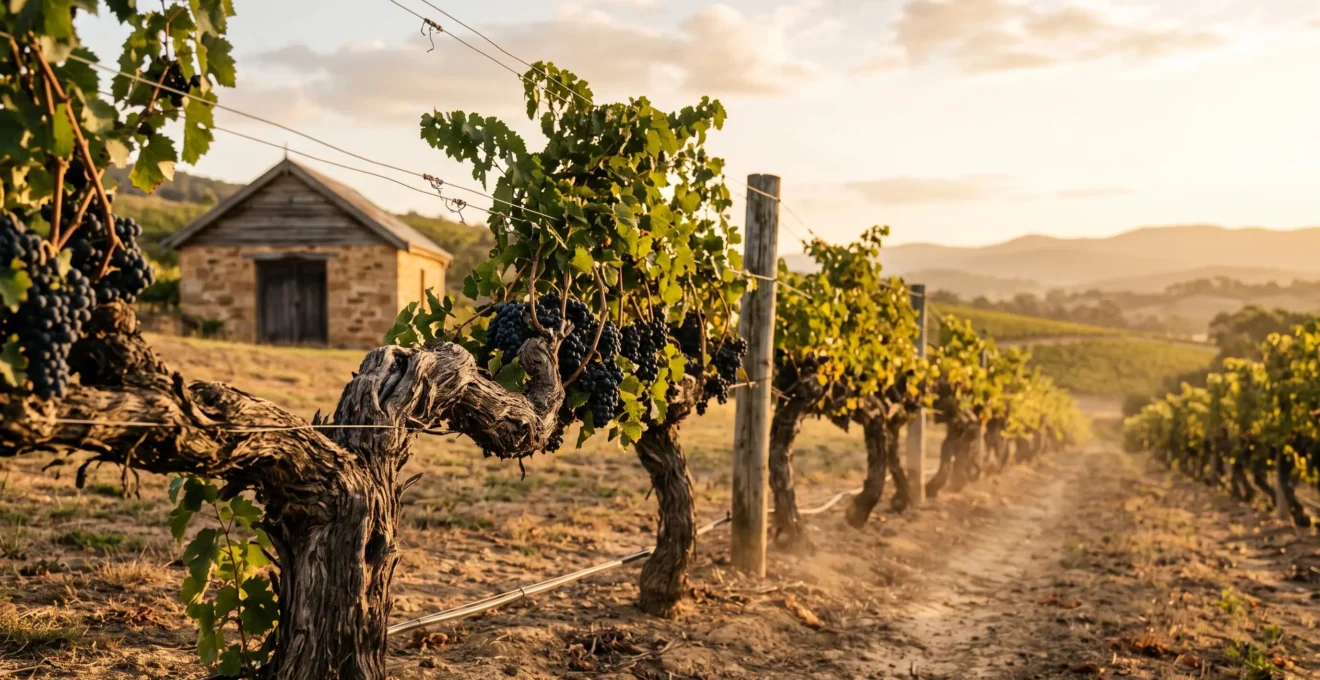
A truly profound Barossa Valley experience isn’t found on the main tourist trail; it’s discovered by understanding its living history.
- The region’s global significance comes from its unique concentration of « ancestor » vines that survived the 19th-century phylloxera plague.
- Authentic encounters happen at small, appointment-only family cellars where you can trace the dialogue between German tradition and modern innovation.
Recommendation: Shift your goal from casual tasting to a planned pilgrimage focused on meeting the custodians of these ancient vineyards and understanding their unique viticultural anomaly.
For many serious wine lovers, a trip to the Barossa Valley follows a familiar script: a drive along the main road, a stop at a few grand, iconic cellar doors, and a tasting of powerful, full-bodied Shiraz. It’s an enjoyable experience, but it often only scratches the surface, treating the region as a museum of famous labels rather than the vibrant, living entity it is. This approach misses the fundamental story that makes the Barossa a global treasure—a story of survival, resilience, and the intimate bond between ancient vines and the families who act as their guardians.
The common perception of the Barossa is one of sun-drenched plains producing uniformly bold red wines. Yet, this simplifies a complex tapestry woven from a unique viticultural anomaly—vines that escaped a global plague—and a deep-rooted German-Silesian culture that continues to shape its character. The real heritage isn’t just in the bottle; it’s in the soil, in the gnarled trunks of 150-year-old vines, and in the quiet conversations with third-generation growers who are debating techniques with their fourth-generation winemaker children.
But what if the key to unlocking this deeper experience wasn’t about visiting more wineries, but about visiting them with a different purpose? This guide is designed to move you beyond the standard cellar door tasting. It’s a strategic framework for the discerning visitor who wants to understand the Barossa’s soul: the significance of its old-vine Shiraz, the dialogue between tradition and innovation, and how to connect with the very custodians of this remarkable living history.
This article will guide you through the essential knowledge and practical steps to transform your visit into a true viticultural immersion. You will learn to identify the markers of true quality, find the producers who operate off the beaten path, and time your visit to gain genuine insight rather than a superficial tasting.
Summary: A Strategic Guide to Unlocking the Barossa’s True Wine Heritage
- Why Barossa Old-Vine Shiraz Rivals the World’s Greatest Red Wines
- How to Find Barossa’s Hidden Family Wineries That Don’t Advertise to Tourists
- German-Heritage Traditional or Modern Innovators: Which Barossa Winemakers to Prioritize?
- The Barossa Visit Timing That Coincides with Vintage Closures and Winemaker Absence
- When to Visit Barossa for Food-Wine Events or Intimate Quiet Tastings?
- Why Australian Cool-Climate Wines Now Rival European Premium Regions
- Why Australian Food Is Now Asian-Indigenous Fusion, Not British Pub Fare
- How to Plan an Australian Wine Region Tour That Reveals Terroir Diversity
Why Barossa Old-Vine Shiraz Rivals the World’s Greatest Red Wines
The global prestige of Barossa Shiraz isn’t a matter of marketing; it is a direct result of a unique historical accident that turned the region into a living museum of viticulture. While the phylloxera louse devastated Europe in the mid-19th century, South Australia’s strict quarantine measures created a viticultural sanctuary. As a result, the Barossa is home to some of the world’s oldest productive Shiraz, Cabernet Sauvignon, Grenache, and Mataro vines, growing on their original, ungrafted rootstock. This isn’t just a historical curiosity; these ancient vines produce fruit with a concentration, complexity, and depth of character that younger vines simply cannot replicate. They are a genetic treasure, a direct link to a pre-phylloxera world of wine.
To formalise this unique asset, the Barossa Grape & Wine Association established the Barossa Old Vine Charter, a world-first classification system. This isn’t just a romantic notion; it’s a verifiable taxonomy that categorises vines into four tiers: Old Vines (35+ years), Survivor Vines (70+ years), Centenarian Vines (100+ years), and the revered Ancestor Vines (125+ years). This charter provides a tangible way for consumers to understand the provenance of their wine. When you taste a wine from an « Ancestor » vine, you are experiencing the product of a plant that has stood for over a century, its deep roots telling the story of countless seasons. As a result of this protective history, South Australia’s strict quarantine policies protected vines from the phylloxera outbreak that wiped out 90% of European vineyards, allowing Barossa’s ungrafted vines to thrive today.
This deep-rooted heritage has earned Barossa Shiraz a place at the top table of global red wines. It’s a sentiment echoed by leading figures in the wine world. Penfolds’ Chief Winemaker Peter Gago, a Barossa local, notes the incredible ascent of the region’s signature grape. In a discussion with Club Oenologique, he stated that » Australian Shiraz now stands confidently alongside the best of the Rhône Valley and the first growths of France. » This isn’t regional pride; it’s a recognition of the profound quality derived from this unique viticultural anomaly.
How to Find Barossa’s Hidden Family Wineries That Don’t Advertise to Tourists
While the iconic estates lining the Barossa Valley Way are essential reference points, the soul of the region often resides in smaller, family-run cellars tucked away on back roads. These are the true custodians of the old vine heritage, often working with tiny parcels of land passed down through generations. Finding them requires a more deliberate strategy than simply following tourist signs. The key is to look for markers of a « grower-first » ethos, where the focus is on viticulture and hands-on winemaking rather than mass-market appeal. These producers rarely have large advertising budgets; their reputation is built on word-of-mouth among serious wine enthusiasts.
A prime example of this profile is Cirillo Estate. The Cirillo family became custodians of a vineyard with vines planted in 1848, making them some of the oldest productive Grenache vines in the world. As a true micro-producer, a visit here is by appointment only, offering a chance for an intimate tasting, often with the winemaker Marco Cirillo himself. This is the antithesis of a crowded, commercial cellar door; it’s a personal connection to the region’s living history. The booking culture is a crucial differentiator in the Barossa, separating high-volume tasting rooms from these coveted, personal experiences.
The following table illustrates the different expectations you should have when planning your visits. Understanding this landscape is key to crafting an itinerary that matches your desire for either polished tours or intimate conversations.
| Winery type | Booking requirement | Typical visitor experience |
|---|---|---|
| Iconic flagship estates (e.g. Henschke) | Always book ahead | Polished, high-demand, limited access to winemaker |
| Historic centenary experiences (e.g. Seppeltsfield Centennial Para Tour) | Book several weeks ahead | Rare tastings, structured tour format |
| Small appointment-only producers (e.g. Spinifex) | Required, limited slots | Higher chance of meeting the winemaker directly |
| Most standard cellar doors | Walk-ins generally accepted | Casual, but weekends can be crowded |
Field Example: The « Grower-First » Profile of Cirillo Estate Wines
The story of Cirillo Estate is a textbook example of what a discerning visitor should seek. The family took stewardship of the land in 1970, which included some of the world’s oldest Grenache vines planted in 1848. A visit requires a pre-arranged appointment, but the reward is the chance to have a tasting hosted by winemaker Marco Cirillo. This represents the pinnacle of a « grower-first » experience, where the focus is entirely on the vineyard’s heritage and the wine it produces, far removed from commercial tourism.
German-Heritage Traditional or Modern Innovators: Which Barossa Winemakers to Prioritize?
The Barossa’s identity is deeply shaped by its German-Silesian heritage, dating back to the 1840s when Lutheran migrants fled persecution in Prussia. They brought with them a strong work ethic, a commitment to farming, and a culture of generational continuity that is still palpable today. This manifests in two distinct but equally important winemaking philosophies: the traditionalists, who uphold the powerful, structured styles that made the region famous, and the modern innovators, who are often the children or grandchildren of those traditionalists, now exploring elegance, subtlety, and alternative varieties.
The most fascinating wineries to visit are often those where this « generational dialogue » is happening under one roof. Here, you can taste the family’s history in a flight of wines—a robust, traditional Shiraz from a father’s block alongside a more vibrant, whole-bunch fermented Grenache crafted by his daughter. This tension between preserving a legacy and forging a new one is the creative engine of the modern Barossa. Prioritizing producers who embody this dynamic offers a far richer experience than visiting those who adhere to a single, monolithic style.
This is a moment of shared concentration, where the weight of heritage meets the excitement of innovation. It is in these quiet moments of evaluation that the true story of the Barossa is written, generation by generation.
The Schwarz Wine Co. perfectly embodies this dynamic. The Schwarz family has been in the Barossa for five generations, first as residents, then as grape growers. The current winemaker, Jason Schwarz, represents the first generation to make wine under the family name, after convincing his father to part with a small parcel of Shiraz from their esteemed Nitschke Block. A visit here allows you to taste this very story: the fruit of decades of family grape-growing, interpreted through a modern winemaking lens. It’s a tangible taste of the generational dialogue that defines the valley.
The Barossa Visit Timing That Coincides with Vintage Closures and Winemaker Absence
For a serious wine lover, the dream is to visit during vintage, the harvest period when the air is thick with the scent of fermenting grapes and the wineries are hives of activity. However, this romantic notion clashes with a practical reality: vintage is precisely the worst time to expect a deep, meaningful conversation with a winemaker. This intense period is an all-consuming sprint, a time of crucial decisions and sleepless nights, making winemakers the least accessible people in the valley.
The Barossa vintage typically runs from February to April. It’s a period of great excitement, but as one local guide notes, while it is the valley’s « busiest and most interesting » time, it is also when winemakers are hardest to reach. Small, family-run operations often close their cellar doors entirely during the peak of harvest to focus on the critical work in the winery and vineyards. Showing up unannounced during this window is likely to lead to disappointment. The unpredictability of each season adds to the pressure; as a recent report highlighted, winemakers have navigated dramatic seasonal extremes, from the cool, wet years of 2022 and 2023 to the dry 2024 and parched 2025 seasons. Each vintage presents a unique, high-stakes challenge, leaving zero time for casual visitor chats.
This macro view into a fermenting vessel offers a glimpse of the intense, biological process that commands every winemaker’s full attention during harvest. The bubbling must, rich with skins and seeds, is a living entity that cannot be ignored.
Therefore, a strategic visitor must make a choice: visit during the aesthetically exciting but personally inaccessible vintage period, or choose a quieter time when the winemakers have emerged from the cellar and have the headspace to share their stories. For those seeking genuine connection and learning, avoiding the main vintage window from February to April is the most critical planning decision you will make. It’s the difference between observing the work from a distance and actually understanding the philosophy behind it.
When to Visit Barossa for Food-Wine Events or Intimate Quiet Tastings?
Choosing when to visit the Barossa depends entirely on your goal. Are you seeking a vibrant, celebratory atmosphere with crowds and a wide variety of food and wine pairings, or are you looking for quiet contemplation and the chance for an in-depth conversation at a cellar door? The region’s calendar offers distinct periods that cater to each of these desires. The key is to align your travel dates with your personal travel style.
For those who thrive on energy and atmosphere, the region’s two major festivals are the main draw. The Barossa Gourmet Weekend in September is an annual event focused on food and wine pairings, with dozens of wineries offering special menus and experiences. For a deeper, more traditional celebration, the Barossa Vintage Festival is a biennial event held in late April that celebrates the end of harvest with parades, community markets, and grape-stomping festivities. It is a true community festival, though it’s important to note its rhythm; for long-term planners, the next festival is scheduled for April 2027, confirming its every-other-year cadence.
Conversely, for the visitor seeking intimacy and education, the best time to visit is outside of these festival periods and, crucially, on weekdays. From Tuesday to Thursday, the cellar doors are quieter, and you are far more likely to find the owner or winemaker pouring the wines. While the Barossa has a stronger walk-in culture than many premium regions, calling ahead is always wise, especially for smaller producers or weekend visits. The ideal strategy for a deep dive is to target the shoulder seasons—late spring (October-November) and autumn (late April-May, post-vintage)—and plan your most coveted visits for mid-week.
| Event | Timing | Character | Best for |
|---|---|---|---|
| Barossa Gourmet Weekend | September, annual | Food-and-wine pairings across 40+ wineries | Atmosphere, dining, casual crowds |
| Barossa Vintage Festival | Late April, biennial | Grape-stomping, markets, live music celebrating harvest | Community festivity and tradition |
Your Action Plan: Securing an Intimate Cellar-Door Visit
- Prioritise Mid-Week Visits: Target Tuesday through Thursday for your top-priority wineries. Owners and winemakers are more likely to be present and have time for conversation.
- Leverage the Walk-in Culture (Wisely): While many places accept walk-ins, always call ahead for smaller, appointment-only producers or for any weekend visit to avoid disappointment.
- Book Key Appointments First: Identify your 2-3 « must-visit » boutique wineries and secure your appointments with them before building the rest of your itinerary.
- Visit in the Shoulder Seasons: Plan your trip for late spring (Oct-Nov) or late autumn (May) to find the perfect balance of good weather and fewer crowds.
- Ask for the « Hidden » Wines: Even at a standard cellar door, ask the staff if they have any small-batch, cellar-door-only, or « winemaker’s pet project » wines open. This often leads to the most interesting tastes.
Why Australian Cool-Climate Wines Now Rival European Premium Regions
The stereotype of Australian wine, particularly from the Barossa, is one of powerful, sun-ripened fruit. However, this ignores one of the most exciting developments in Australian viticulture: the mastery of cool-climate winemaking. Within the Barossa zone itself lies a perfect example of this terroir diversity: the Eden Valley. Though geographically adjacent to the Barossa Valley floor, it is a world apart in terms of climate and wine style.
The defining factor is altitude. The Eden Valley’s vineyards are situated at elevations of up to 500 metres, creating a significantly cooler climate than the valley floor below. This elevation results in a longer, slower ripening season, which allows grapes like Riesling and Shiraz to develop intense flavour concentration while retaining crucial acidity. The result is wines of elegance, structure, and finesse that can stand alongside the premium cool-climate regions of Europe. Tasting a Barossa Valley Shiraz and an Eden Valley Shiraz side-by-side is a profound lesson in the power of terroir. The former might be rich and chocolatey, while the latter is perfumed, spicy, and savoury.
This wide, misty view of a high-altitude vineyard captures the essence of the Eden Valley. The gentle slopes and cool air are the key to its elegant, structured wines, a stark contrast to the warmer valley floor.
The climatic difference is not subtle. As wine authorities note, vineyards at an altitude of around 500 metres in places like Pewsey Vale and High Eden are considerably cooler, with growing season temperatures significantly lower than those of the Barossa Valley. This allows the Eden Valley to be one of Australia’s most celebrated regions for Riesling, producing wines of searing intensity and longevity, while also crafting a more elegant, age-worthy style of Shiraz.
Why Australian Food Is Now Asian-Indigenous Fusion, Not British Pub Fare
Just as Australian wine has evolved beyond simple, powerful stereotypes, so too has its culinary scene. The old cliché of Australian food being limited to meat pies, fish and chips, and heavy British pub fare is decades out of date. The modern Australian gastronomic identity, especially at the high-end winery restaurants you’ll find in the Barossa, is a vibrant fusion of Asian techniques and native, Indigenous ingredients. This movement is driven by a desire to create a cuisine that is uniquely of its place.
Chefs are turning away from European traditions and looking to the landscape around them. Ingredients like lemon myrtle, saltbush, finger limes, and quandongs are no longer novelties but staples in the modern pantry. These native botanicals offer unique flavours—citric, savoury, and aromatic—that are now being paired with the precision and techniques of Asian cooking, particularly Japanese and Southeast Asian. You might find kangaroo served with a tamarind glaze, Spencer Gulf prawns seasoned with saltbush and finger lime, or a dessert featuring wattleseed and macadamia.
This culinary shift makes perfect sense alongside the evolution in wine. As winemakers explore more elegant, nuanced styles, chefs are creating dishes with the clarity, acidity, and complexity to match. A visit to a top Barossa restaurant like Hentley Farm or Appellation is not just a fine dining experience; it’s a direct encounter with this modern Australian identity. It’s a cuisine that is confident, forward-looking, and deeply connected to the terroir—both in the vineyard and on the plate.
Key Takeaways
- The Barossa’s global importance stems from its pre-phylloxera « Ancestor Vines, » a living viticultural history that translates to unparalleled wine complexity.
- True access comes from targeting small, family-run, appointment-only producers where the « generational dialogue » between tradition and innovation is tangible.
- Strategic timing is everything: avoid the Feb-Apr vintage for winemaker access and choose mid-week visits in shoulder seasons for intimate tastings.
How to Plan an Australian Wine Region Tour That Reveals Terroir Diversity
A truly revealing tour of the Barossa—or any great Australian wine region—is not planned around towns, but around terroir. The most common mistake visitors make is creating a checklist of wineries without considering their geographical and climatic context. A successful itinerary is designed as a comparative tasting, allowing you to experience firsthand how subtle shifts in altitude, soil, and aspect dramatically reshape the wine in the glass. This is the difference between simply collecting winery names and genuinely understanding a region.
The first step is to treat the Barossa not as a single entity, but as two distinct itineraries: the Barossa Valley floor and the Eden Valley. Dedicate at least one full day to each. On your Barossa Valley day, focus on the rich, powerful Shiraz from the warmer, lower-lying areas. The next day, ascend to the Eden Valley to taste its elegant, spicy Shiraz and world-class Rieslings. The exercise becomes even more powerful if you can taste the same grape variety from the same producer, but sourced from their different regional vineyards. This back-to-back comparison is a masterclass in terroir.
Do not try to « do it all. » The region is vast and dense with producers. A rushed, checklist-style approach will only lead to palate fatigue and a superficial understanding. Instead, choose just three to four carefully selected wineries per day. This slower pace allows for longer, more meaningful conversations and a deeper appreciation of what makes each place unique. This approach transforms a simple tour into a focused educational journey.
| Factor | Barossa Valley (floor) | Eden Valley (elevated) |
|---|---|---|
| Elevation | Lower lying | 380–500m above sea level |
| Climate | Warmer | Cooler, longer ripening season |
| Signature style | Rich, full-bodied Shiraz | Elegant Shiraz and premium Riesling |
| Defining driver | Warmth and low rainfall | Altitude and flavour concentration |
To put these principles into practice, start by mapping out a two-day itinerary that deliberately contrasts the warm valley floor with the cool-climate highlands, choosing producers that exemplify the unique character of each terroir.